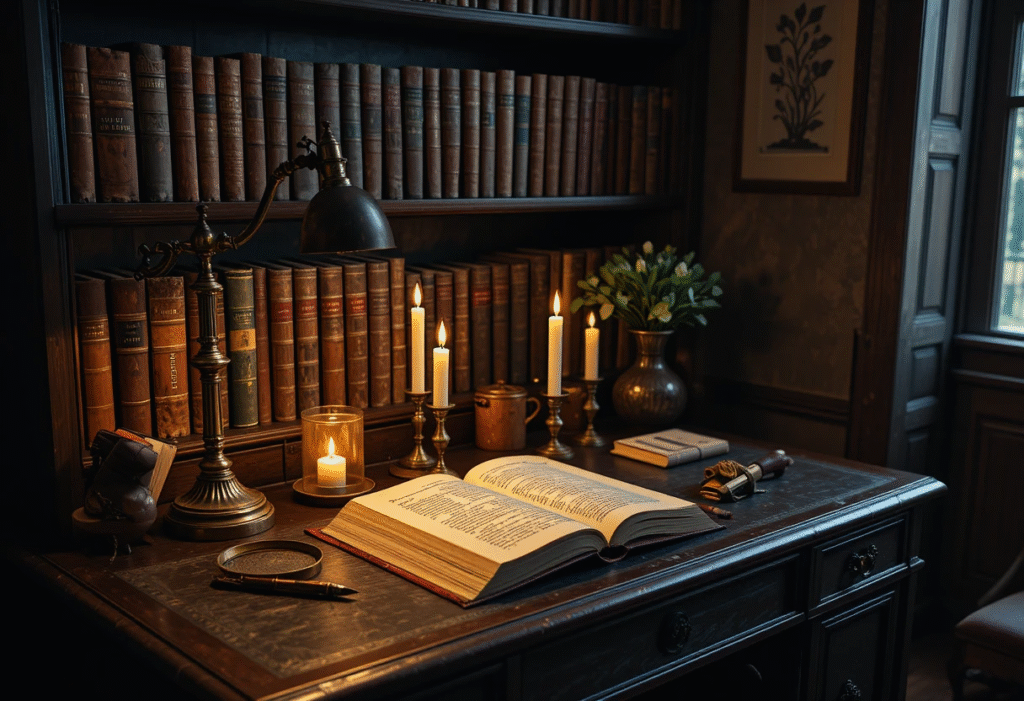

The appeal of vintage globes and maps decor transcends simple interior design trends. These items are visual artifacts—remnants of history, geography, and exploration that inject an unparalleled sense of wonder and scholarly charm into any space. Whether you are aiming for a refined library look, the moody atmosphere of Dark Academia, or a personalized, eclectic aesthetic, globes and maps are the perfect focal point.
This comprehensive guide delves into why these pieces are essential decor, how to effectively source them on a budget, and the best ways to style them to maximize their visual and historical impact in your home.
The Enduring Appeal of Vintage Cartography
Why do designers and decorators continually return to vintage globes and maps decor?
1. Historical Narrative
Old maps and globes tell a story of political and geographical change. A globe from the 1950s, for example, features countries and borders that no longer exist, serving as a tangible record of history. This historical depth gives a room immediate character that modern decor often lacks.
2. Rich Color and Texture
Vintage maps feature incredibly rich color palettes. The deep burgundies, muted greens, aged sepia tones, and faded blues found in old paper and canvas add a warm, complex texture to a wall that is softer and more appealing than modern, digitized prints. The natural wear, creases, and patina of aged paper further enhance this visual richness.
3. Biophilic Connection
Maps and globes are visual representations of the natural world and systems. Displaying them provides a subtle, biophilic connection to geography and earth sciences, which can subconsciously boost curiosity and reduce stress.
Part 1: Sourcing Vintage Globes and Maps Decor on a Budget
High-quality, genuine antiques can cost hundreds. Here is how to find the look for less.
1. The Value of Replica Prints
The most affordable way to achieve the vintage maps decor aesthetic is through high-quality digital prints.
-
Public Domain Archives: Search museum digital libraries (Library of Congress, NY Public Library, British Library) for public domain maps. These high-resolution files can be downloaded for free.
-
Printing Strategy: Print large-scale images on heavy, matte paper or canvas at a local print shop. Opt for prints that intentionally have an aged, sepia, or faded look to mimic genuine vintage paper.
2. Thrift Stores and Flea Markets (The Globe Hunt)
Globes are often found at thrift stores because they were once common household items.
-
What to Look For: Focus on the base material. Globes with heavy metal or solid wood bases look more expensive than plastic ones. Don’t worry about damage to the paper; slight scuffing adds character.
-
Small Globe Collections: Instead of one massive, expensive globe, buy several small, cheap globes of varying sizes and colors. Grouping them together creates a more dynamic, curated display.
3. Repurposing Atlases and Books
-
The Hack: Buy old, discarded atlases or encyclopedias cheaply from thrift stores. Carefully remove the pages and use them as instant, small format wall art. Frame individual pages or use them in a collage.
Part 2: Styling Hacks for Maximum Visual Impact
The way you present your vintage globes and maps decor dictates its sophistication. Use these styling hacks to turn your finds into true focal points.
4. The Large-Scale, Segmented Map Wall
For a huge statement wall, avoid buying a single large framed map, which is expensive.
-
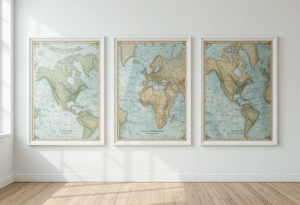
The Hack: Purchase one large printed map (or print a public domain file). Cut the map into three or four equal segments. Frame each segment individually using simple, matching frames (e.g., thin black or natural wood).
-
The Result: Hanging the segments closely together creates a modern, gallery-style display that is visually arresting and costs much less than a single custom frame.
5. Floating the Map (Renter-Friendly)
Avoid expensive traditional framing altogether while keeping your map damage-free.
-
The Hack: Mount your paper map onto foam core board using spray adhesive. Then, use heavy-duty Command Strips to hang the board directly on the wall. This gives the map a clean, lightweight, floating look.
-
The Alternative: Use simple wooden poster hangers (two magnetic wood strips that clamp the top and bottom of the map) for a casual, bohemian look.
6. Globe Staging: The Rule of Three and Height
Globes are sculptural. Grouping them effectively enhances their impact.
-
The Hack: Never display a globe alone unless it’s very large. Group three globes of varying sizes together.
-
Layering: Place the globes at different heights. Elevate a small globe on a stack of antique books or a small wooden box. Place the largest globe directly on the floor or a console table.
-
Accents: Pair the grouping with contrasting textures, like brass candlesticks, a small desk lamp, or a live indoor plant.
7. The Contrast of Old and New
The most appealing aesthetic involves contrasting the age of the decor with the modernity of the frame.
-
The Hack: Take a map with aged, sepia tones and frame it in a sleek, modern metallic or matte black frame. This contrast highlights the map’s historical beauty while fitting it perfectly into a contemporary interior.
Part 3: Integrating Maps and Globes in Every Room
Vintage globes and maps decor can be integrated into nearly every room of the home beyond the traditional home office.
8. The Bedroom: Subtle Wall Accents
-
Use a large celestial or astronomical chart (often printed in deep navy or black) above the bed to capture the moody Dark Academia feel.
-
Place a small, unique desk globe on a nightstand instead of standard decorative accessories.
9. The Kitchen: Functional Decor
-
Frame a small map of a European region (like Italy or France) and place it near a wine rack or coffee station. It adds color and a sense of wanderlust.
-
Use a small globe as a colorful accent on open shelving alongside ceramics and cookbooks.
10. The Entryway: Immediate Character
-
A large, simple framed vintage world map in an entryway immediately sets a sophisticated, well-traveled tone for the home.
-
Place a mid-sized, attractive globe on a slim console table. It’s a functional piece that invites conversation.
Final Thoughts: Decor with Depth
Integrating vintage globes and maps decor is one of the most effective ways to infuse history, depth, and scholarly charm into a modern space. By utilizing smart sourcing hacks—prioritizing high-quality prints and searching for solid bases—and styling your finds with intentional layering and modern framing, you create a personalized environment that celebrates both exploration and history.