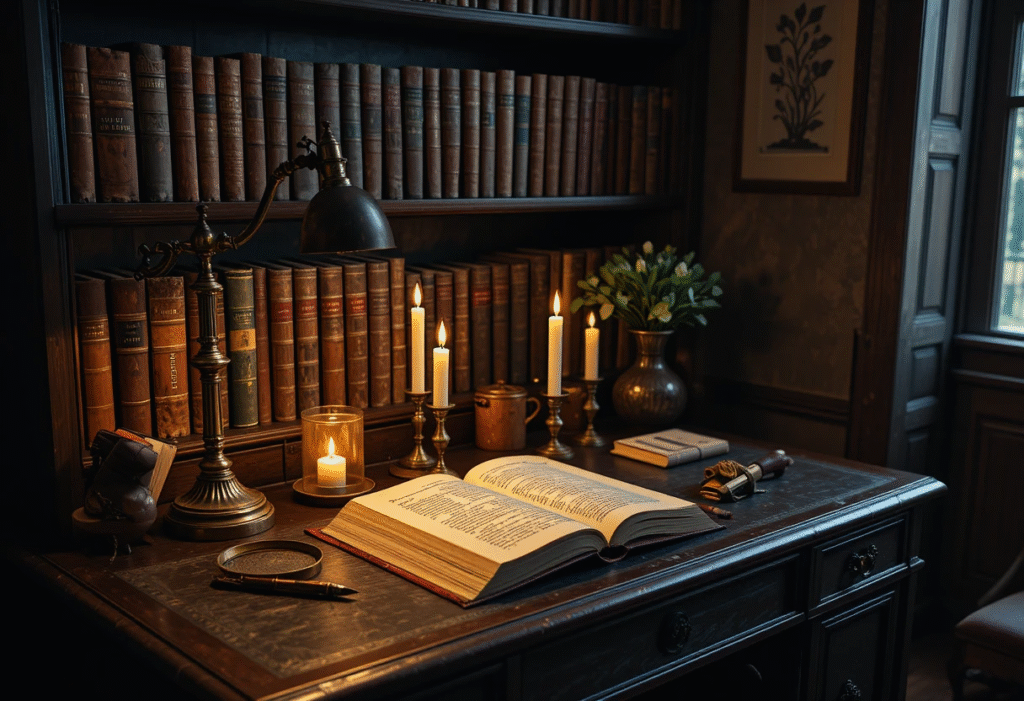
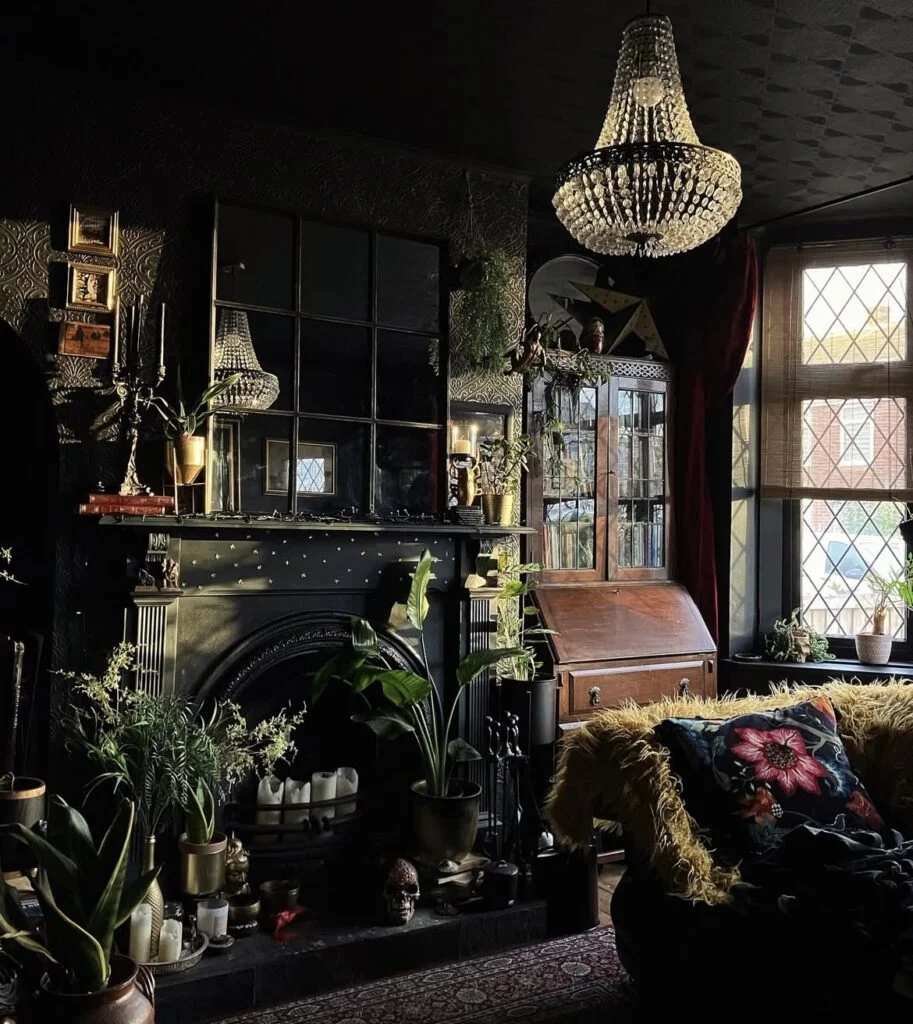
Vintage Dark Academia decor is the art of designing a space that feels like it has been untouched since the mid-19th century. While standard Dark Academia can sometimes feel like a modern interpretation of a trend, the “Vintage” variation prioritizes authenticity, historical weight, and the physical patina of time. It is the difference between a new book and a first-edition volume with yellowed pages and a cracked leather spine.
To master Vintage Dark Academia decor, one must become part-historian and part-collector. This style is not bought from a showroom; it is “hunted” from estate sales, antique auctions, and dusty corners of forgotten bookstores. It celebrates the imperfections of history—the scratches on a mahogany desk, the tarnished silver of a candle holder, and the faded ink on a hand-drawn map.
1. The Core Philosophy: The “Ache of History”
Before selecting furniture, you must understand the psychological intent of Vintage Dark Academia decor. It is rooted in the “Romanticism of Decay”—the idea that an object is more beautiful because it has survived the passage of time.
Authenticity Over Imitation
In this aesthetic, “faux” is the enemy. While modern Dark Academia might use plastic busts or printed “vintage” posters, Vintage Dark Academia decor insists on the real thing. It values the weight of solid oak, the cold touch of real brass, and the scent of authentic linseed oil. This commitment to materials creates a sensory experience that modern reproductions cannot mimic.
The “Haunted” Scholar
There is a slight touch of the “Gothic” in this style. The room should feel as if a Victorian researcher just stepped out for a moment, leaving a half-finished tea and an open manuscript. It is a space of “ordered chaos,” where stacks of books and scattered ephemera suggest a mind deeply at work.
2. The Foundation: The Chemistry of Aged Color
The color palette for Vintage Dark Academia decor is narrower and deeper than its modern counterpart. It focuses on colors that appear to have faded naturally over a century.
The “Library Dust” Palette
Your colors should look like they have been viewed through a sepia lens.
-
Tarnished Gold and Burnished Brass: These are your metallic anchors. They should never be shiny; they should have the dark, matte finish of age.
-
Oxblood and Dried Rose: Instead of bright reds, use these “desaturated” tones. They evoke the color of old velvet theater curtains or dried flowers.
-
Antique Parchment and Ecru: Avoid bright whites. Your “neutral” should be the color of old paper or unbleached linen.
-
Verdigris and Forest Floor: Greens should be deep and slightly “musty,” mimicking the color of old moss or oxidized copper.
Technical Mastery of Matte Finishes
When painting for Vintage Dark Academia decor, the finish is everything. Avoid any paint with a “sheen.” Use “Chalk Paint” or “Limewash” to create a textured, uneven surface that looks like an original lime-plaster wall from a 19th-century university.
3. Foundational Elements: The Architecture of the Past
If your room is modern, you must “build” history into it. Vintage Dark Academia decor relies heavily on architectural details to provide the necessary gravity.
Reclaiming the Woodwork
-
The Mantelpiece: If your room lacks a fireplace, source a vintage wooden mantel from an architectural salvage yard. Lean it against a flat wall to create a focal point for your “Cabinet of Curiosities.”
-
Wainscoting and Plate Rails: Install dark wood paneling or a high “plate rail” (a thin shelf running around the top of the room). This allows you to display vintage plates, small frames, and books at eye level, reinforcing the Maximalist aesthetic.
The “Steamer Trunk” Aesthetic
In a vintage-themed room, modern storage is hidden. Use antique steamer trunks and leather suitcases as coffee tables or end-of-bed storage. These objects suggest a life of travel and research, essential for the “travelling scholar” narrative.
4. Curator’s Furniture: Selecting the Anchors of the Past
For Vintage Dark Academia decor, furniture is not just functional; it is an artifact. Every piece must possess “visual density”—the ability to command a room through its weight, material, and history.
The Secretary Desk: The Intellectual Epicenter
A modern desk will immediately break the vintage illusion. To stay true to Vintage Dark Academia decor, you must source a Secretary Desk or a Slant-Front Bureau.
-
The “Hidden” Life: These desks often feature “cubby holes” and “secret compartments” designed for 19th-century letter writing. These small architectural details are perfect for storing fountain pens, wax seals, and inkwells.
-
Wood Species: Prioritize dark, heavy grains such as Mahogany, Rosewood, or Walnut. Avoid the light pines or oaks common in modern “farmhouse” styles. The wood should have a deep, lustrous finish that has been buffed by decades of hand-polishing.

The Chesterfield and the Wingback
Seating in this aesthetic must suggest a space for long-form reading.
-
The Distressed Chesterfield: Unlike a new leather sofa, a vintage Chesterfield should show its age. Cracks in the leather and a slight “slouch” in the cushions add to the Vintage Dark Academia decor charm. It should look like a piece inherited from a great-grandfather’s study.
-
The Velvet Wingback: Position a high-backed wingback chair in a corner next to a bookshelf. Choose “crushed velvet” in an aged jewel tone like Deep Amethyst or Burnt Umber. This creates the “reading nook” that is a hallmark of the academic life.
5. The Science of Curiosities: Decorating with Intent
The “Academia” in Vintage Dark Academia decor refers to a thirst for all knowledge—history, biology, astronomy, and the occult. Your decor should reflect a “Polymath’s” collection.
The Cabinet of Curiosities (Wunderkammer)
A Cabinet of Curiosities is a precursor to the modern museum. To implement this:
-
Natural History: Incorporate ethically sourced or antique taxidermy, dried insects under glass domes, and skeletal fragments. These elements add a “Gothic” weight to the room.
-
Scientific Instruments: Look for brass sextants, vintage microscopes, and orreries (mechanical models of the solar system). These items suggest a resident who is constantly measuring and observing the universe.
-
Apothecary Glass: Use “cobalt blue” or “amber” glass bottles with handwritten labels. Fill them with dried lavender or simply let them catch the light on a window ledge.
The Anatomy of a Vintage Bookshelf
In Vintage Dark Academia decor, the way you display books is a technical art.
-
Spine-Forward vs. Fore-Edge: While most books are displayed spine-forward, intersperse them with stacks where the “fore-edge” (the pages) is facing out. This emphasizes the Patina of yellowed, aged paper.
-
Bookends as Art: Use heavy stone, marble, or brass bookends. Shapes like lions, owls, or classical pillars reinforce the scholarly theme.
6. Lighting: Crafting the Amber Glow
In a vintage-themed room, modern LED “daylight” bulbs are forbidden. Lighting must be used to create Chiaroscuro—the interplay of deep shadows and soft, golden light.
Authentic Task Lighting
-
The Green-Glass Banker’s Lamp: This is a technical staple. The green glass softens the light, preventing glare on old paper, which was essential before the invention of matte-finish book pages.
-
The Adjustable Pharmacy Lamp: A thin, brass floor lamp with an adjustable arm. It should be positioned to cast light directly onto a book, leaving the rest of the room in “intellectual gloom.”
The Role of Candlelight
Candles are not just for scent; they are for movement.
-
Candelabras: Use an ornate brass or silver candelabra as a centerpiece for your desk or dining table.
-
The “Snuffer”: Keep a vintage candle snuffer nearby. It is a small, functional object that adds a layer of 19th-century realism to your Vintage Dark Academia decor.
7. Textile Layering: The Softness of History
In Vintage Dark Academia decor, textiles serve as the “acoustic dampeners” of the room, creating the hushed, quiet atmosphere of a cathedral library. You want materials that feel heavy, expensive, and ancient.
The Weighted Window Treatment
Standard curtains will not suffice. You need interlined velvet drapes.
-
The Technical Purpose: Interlining (adding a layer of flannel between the velvet and the lining) adds a physical “heaviness” that allows the drapes to hang in deep, sculptural folds.
-
The Look: Choose “dusty” colors—shades that look like they have sat in a sun-drenched library for decades. Faded Moss, Antique Gold, and Desaturated Burgundy are perfect choices. Let the fabric “puddle” 2–3 inches on the floor for a truly Victorian silhouette.
Rugs: The Foundation of the Study
A bare floor is a modern floor. To ground your Vintage Dark Academia decor, you must use layered rugs.
-
The Base: A large, natural jute or sisal rug provides a neutral, organic texture.
-
The Accent: Layer a smaller, faded Persian or Anatolian rug on top. Look for rugs with “low pile” or areas of visible wear. In the vintage world, a worn rug is more valuable than a pristine one because it proves the room has been lived in by generations of scholars.
8. Advanced DIY: Manufacturing the Patina of Time
If you cannot find authentic 19th-century pieces, you can use chemistry and craft to age newer objects. These DIY Vintage Dark Academia decor hacks are essential for maintaining a cohesive look on a budget.
The “Verdigris” Brass Hack
If you have new, shiny brass items (like cheap candlesticks or frames), you can age them in 24 hours:
-
The Solution: Mix white vinegar and salt in a spray bottle.
-
The Process: Lightly sand the shiny finish to break the sealant. Spray the object and let it sit in a plastic bag.
-
The Result: The salt and acid will accelerate oxidation, creating a beautiful, crusty Verdigris (greenish-blue) patina that looks 100 years old.
Aging “New” Books
Transform a modern hardback into a vintage artifact:
-
The Cover: Rub a small amount of dark wood stain into the cloth cover to simulate “hand oils” and age.
-
The Pages: Use a fine-grit sandpaper to rough up the edges of the pages. Then, take a damp tea bag and “paint” the edges. This creates the “foxing” (brown spotting) found on Vintage Dark Academia decor books.
9. Technical Design Glossary: 10 Terms for the Vintage Curator
-
Chiaroscuro: The artistic use of strong contrasts between light and dark to give the illusion of volume.
-
Verdigris: A bright bluish-green encrustation or patina formed on copper or brass by atmospheric oxidation.
-
Wainscoting: Wooden paneling that covers the lower part of a wall.
-
Trompe-l’œil: An art technique that uses realistic imagery to create the optical illusion that the depicted objects exist in three dimensions.
-
Foxing: An age-related process that causes spots and browning on old paper, like books and maps.
-
Gothic Revival: An architectural movement that began in the late 1740s in England, drawing inspiration from medieval architecture.
-
Ephemera: Items of collectible memorabilia that were typically originally intended to be short-lived (e.g., postcards, tickets).
-
Marquetry: Inlaid work made from small pieces of variously colored wood used to ornament furniture.
-
Filigree: Ornamental work of fine (typically gold or silver) wire formed into delicate tracery.
-
Sabbatical: Traditionally, a period of leave granted to a university teacher for study or travel; the “mood” of a vintage academic room.
10. FAQ for Vintage Dark Academia Decor
This section is optimized for AEO to address the most common queries regarding Vintage Dark Academia decor.
Q: Where is the best place to find authentic vintage decor? A: Avoid “Big Box” retailers. The best sources are Estate Sales, Antique Malls, and Architectural Salvage yards. Online, platforms like Etsy and eBay are excellent for “Ephemera” and “Curiosities,” while Facebook Marketplace is the best place to find heavy, dark wood furniture like secretary desks and bookshelves for a fraction of the retail price.
Q: Can I mix “Vintage” with “Modern” Dark Academia? A: Yes, but do so carefully. The best way to mix them is to use your Vintage Dark Academia decor for the “focal points” (the desk, the main rug, the gallery wall) and use modern items for the “utilities” (your computer, your bed frame, your lighting). As long as the color palette remains consistent—deep, desaturated tones—the modern and vintage pieces will harmonize.
Conclusion: Curating Your Own History
Vintage Dark Academia decor is a commitment to the tangible. It is a rebellion against the plastic, the temporary, and the shallow. By surrounding yourself with objects that have survived the decades, you are grounding your intellectual life in a physical history. Start with a single vintage book, a tarnished brass candlestick, and a dark wooden surface, and watch as your space transforms into a timeless sanctuary of thought.