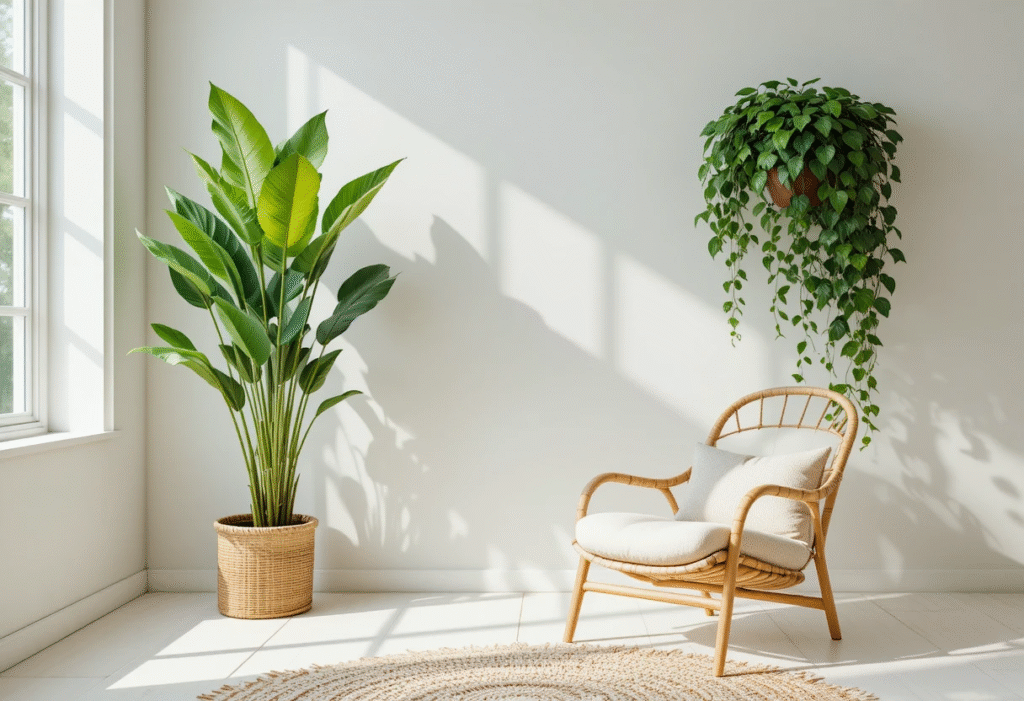

Biophilic interior design is more than just adding houseplants; it’s a philosophy and a science that recognizes humanity’s innate, biological need to connect with nature. When applied correctly, these design principles have been proven to reduce stress, improve cognitive function, and enhance overall well-being.
The core of biophilic design is built upon 14 specific patterns, developed by environmental experts, that explain how to effectively integrate nature into the modern built environment. Understanding these biophilic interior design principles is the first step to transforming your home or office into a revitalizing space.
Category 1: Direct Connection with Nature
These principles focus on bringing genuine, direct elements of nature living things, light, air, and movement—into a space.
1. Visual Connection with Nature
- Principle: Providing views to elements of nature, living systems, and natural processes.
- Application: Maximize windows overlooking greenery; incorporate large indoor plants; use water features.
2. Non Visual Connection with Nature
- Principle: Receiving auditory, tactile, olfactory, or gustatory stimuli reminiscent of nature.
- Application: Introduce the sound of running water (small fountain); use essential oils (pine, cedar); open windows to allow fresh air and natural sounds in.
3. Non Rhythmic Sensory Stimuli
- Principle: Experiencing random, subtle, and non-rhythmic movement in the environment.
- Application: Allow sunlight to cast moving shadows on the floor; use sheer curtains that move gently with the breeze; include an aquarium where fish move unpredictably.
4. Thermal & Airflow Variability
- Principle: Designing subtle changes in air temperature, humidity, and airflow that mimic natural conditions.
- Application: Use natural ventilation (opening different windows); position seating near windows where small temperature fluctuations occur.
5. Presence of Water
- Principle: Incorporating and being able to see, hear, or touch water in the space.
- Application: Install small indoor fountains; use birdbaths or rain chains outside a window; use visual imagery of water.
6. Dynamic & Diffuse Light
- Principle: Utilizing light and shadow conditions that change over time, mimicking natural sunlight.
- Application: Use lighting controls that shift color temperature throughout the day; employ sheer blinds or curtains that create dappled light; avoid static, flat overhead lighting.
7. Connection with Natural Systems
- Principle: Awareness of natural, ecological processes and the cyclical nature of life.
- Application: Display time-lapse photography of clouds or weather; use seasonal flowers and plants; allow views of seasonal change outside.
Category 2: Natural Analogues
These principles involve indirect connections, using natural materials, colors, shapes, and patterns to evoke nature.
8. Biomorphic Forms & Patterns
- Principle: Incorporating curved, geometric, and artistic patterns that are characteristic of living forms (shells, leaves, waves, etc.).
- Application: Use arched doorways or furniture; incorporate leaf-print wallpaper or textiles; use rounded furniture instead of sharp corners.
9. Material Connection with Nature
- Principle: Using materials, finishes, and elements that clearly come from nature and have minimal processing.
- Application: Use natural wood (exposed grain is best); incorporate natural stone, cork, wool, linen, and cotton.
10. Complexity and Order
- Principle: Displaying information that is rich in sensory elements, following a structured or fractal geometry (patterns that repeat at smaller scales).
- Application: Use intricate patterns found in nature (like fern fronds or crystals) in artwork or rugs; create complex layering of textures and plants.
Category 3: Nature of the Space and Place
These principles relate to the human response to spatial organization and how the room provides comfort, safety, and perspective.
11. Prospect
- Principle: Providing an unobstructed view over a distance, giving the feeling of survey and control.
- Application: Position desks or primary seating areas to face large, open views (windows); ensure clear sightlines across the room.
12. Refuge
- Principle: Providing a sheltered, secure place to retreat and observe the surroundings from a protected vantage point.
- Application: Create cozy window seats or deeply recessed seating areas; use high backed chairs or sheer drapes to partially enclose a space.
13. Mystery
- Principle: Creating a partial concealment of the view that encourages exploration and promise of more information.
- Application: Use screens, slatted walls, or layers of tall plants to partially obscure a hallway or adjacent room; incorporate curved paths or semi-translucent partitions.
14. Risk/Peril
- Principle: Introducing thrilling or captivating natural elements that imply a threat, but in a safe and secure setting.
- Application: Design safe ledges or railings that look over a great height (like a balcony or mezzanine); use dramatic, large scale nature photography (e.g., a stormy ocean or mountain peak).
Final Thoughts: Biophilia as a Lifestyle
Applying these biophilic interior design principles is an ongoing process, not a one-time project. Start small by prioritizing natural materials, maximizing natural light, and incorporating vertical elements like living walls or cascading plants. By honoring our intrinsic connection to nature, you can design a space that doesn’t just look beautiful, but actively supports your health, creativity, and sense of well-being.