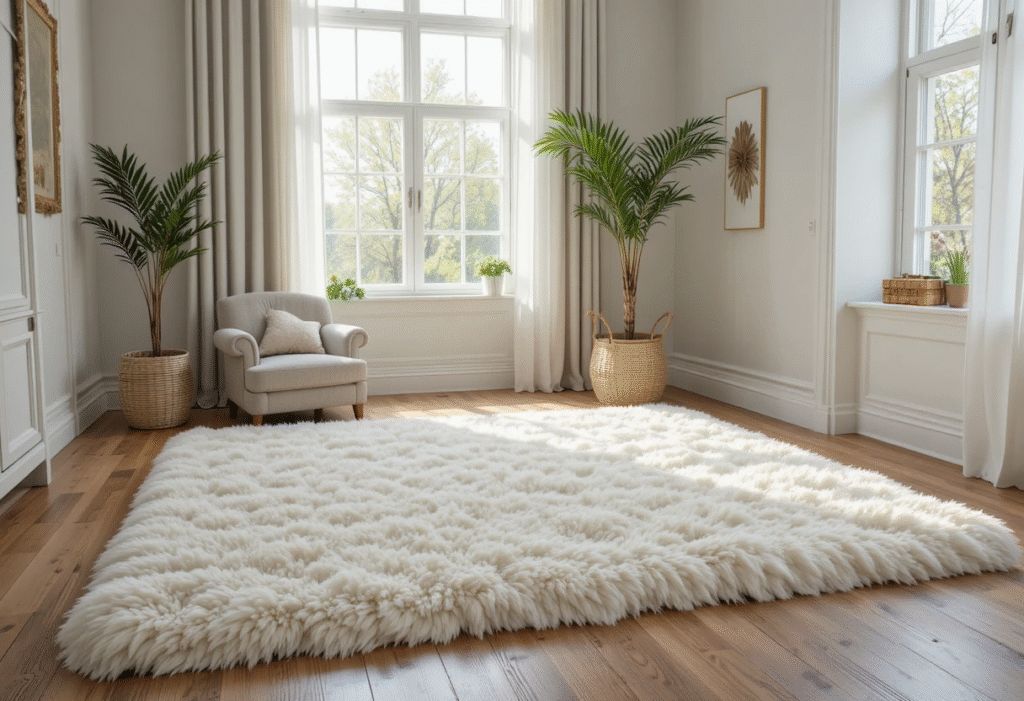

Caring for Wool Cotton & Synthetic Rugs
Rugs are major investments that anchor your home design. To maximize their lifespan and maintain their color and texture, proper care is non-negotiable. However, wool, cotton, and synthetic materials have vastly different needs.
Understanding the specific requirements for Caring for Wool Cotton & Synthetic Rugs is key. We’ve broken down the best practices for routine maintenance and stain removal for each popular material.
General Rug Care Principles
Regardless of the fiber, these basic steps ensure the longevity of any rug in your home.
1. The “Blot, Don’t Rub” Rule
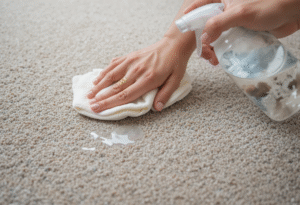
This is the most important rule for stain removal. Never rub a spill. Rubbing pushes the stain deeper into the fibers and damages the pile. Always use a clean white cloth or paper towel to gently blot the area until the moisture is absorbed.
2. Rotate Your Rugs
Rotate your rugs 180 degrees every 6–12 months. This ensures that wear, fading from sunlight, and traffic patterns are evenly distributed across the surface.
3. Use a Rug Pad
A non-slip rug pad protects your flooring and, more importantly, reduces friction on the rug’s backing. This prevents premature wear and tear, significantly extending the rug’s life.
Routine Maintenance: Caring for Wool, Cotton & Synthetic Rugs
The primary difference in maintenance lies in how often and how intensely you should vacuum each material.
A. Wool Rugs (The Natural Fiber)
Wool is a natural protein fiber that is highly durable and naturally stain-resistant due to its lanolin coating.
-
Vacuuming: Vacuum once a week using a suction-only attachment or setting the vacuum to the highest pile height and turning off the beater bar (the rotating brush). The beater bar will pull the natural fibers out, causing excessive shedding and damaging the pile.
-
Shedding: Wool sheds naturally for the first few months. This is normal, but avoid over-vacuuming during this initial period.
-
Washing: Never machine wash a large wool rug. Use professional steam cleaning every 1–3 years.
B. Cotton Rugs (The Washable Fiber)
Cotton rugs (often flat-weave or braided) are prized for their softness and easy maintenance.
-
Vacuuming: Vacuum gently once a week using a low suction setting and no beater bar. Cotton can stretch, so treat it carefully.
-
Washing: Small cotton rugs (5×8 or smaller) can often be machine washed on a cold, delicate cycle with mild detergent. Air dry only. Never put cotton rugs in the dryer, as they will shrink and deform.
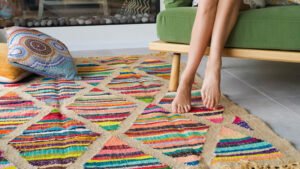
C. Synthetic Rugs (Polypropylene, Polyester, Viscose)
Polypropylene (Olefin) is the most popular synthetic due to its durability and stain resistance.
-
Vacuuming: Vacuum aggressively 1–2 times a week using the beater bar set to a medium height. Synthetics are highly durable and benefit from the deep cleaning provided by the rotating brush.
-
Washing: Synthetics are water-resistant. Use a carpet cleaner or professional service every 1–2 years. Many small synthetic rugs can be spot-cleaned effectively with mild soap and water.
Stain Removal Strategies for Specific Fibers
Stain removal requires acting fast and using the right cleaning agent for the specific rug fiber.
4. Spills and Stain Removal
| Fiber Type | Cleaning Agent (Must be gentle!) | Stain Tip |
| Wool | Mild Dish Soap (Clear, dye-free) and Cold Water. | Avoid hot water and strong chemicals (like bleach or ammonia); they strip the lanolin coating, making the wool brittle and vulnerable. |
| Cotton | Diluted White Vinegar (1 part vinegar to 3 parts water). | Cotton is prone to bleeding colors. Test the solution on an inconspicuous spot first to ensure the color won’t run. |
| Synthetics | Mild Detergent, Glass Cleaner, or Commercial Carpet Spot Remover. | Synthetics are tough! You can use stronger products than on natural fibers, but always check the manufacturer’s label first. |
5. Dealing with Common Stains
-
Pet Accidents: Blot immediately. Use a solution of 1 part white vinegar, 1 part water, and a few drops of dish soap. Blot again thoroughly, then blot with plain water. Follow this up with an enzyme cleaner designed for pet accidents.
-
Oil/Grease: Scrape off excess. Sprinkle the area heavily with baking soda or cornstarch (these absorb the oil). Leave for 15 minutes, then vacuum up the powder before spot cleaning.
Final Thoughts: Protecting Your Investment
Properly Caring for Wool Cotton & Synthetic Rugs ensures that they remain beautiful centerpieces in your home for years. Remember the mantra: be gentle with natural fibers (wool, cotton) by avoiding the beater bar and hot water, and be vigilant with synthetic fibers (polypropylene) by vacuuming regularly to maintain the pile. Consistent, appropriate maintenance is the best guarantee of a long-lasting rug.