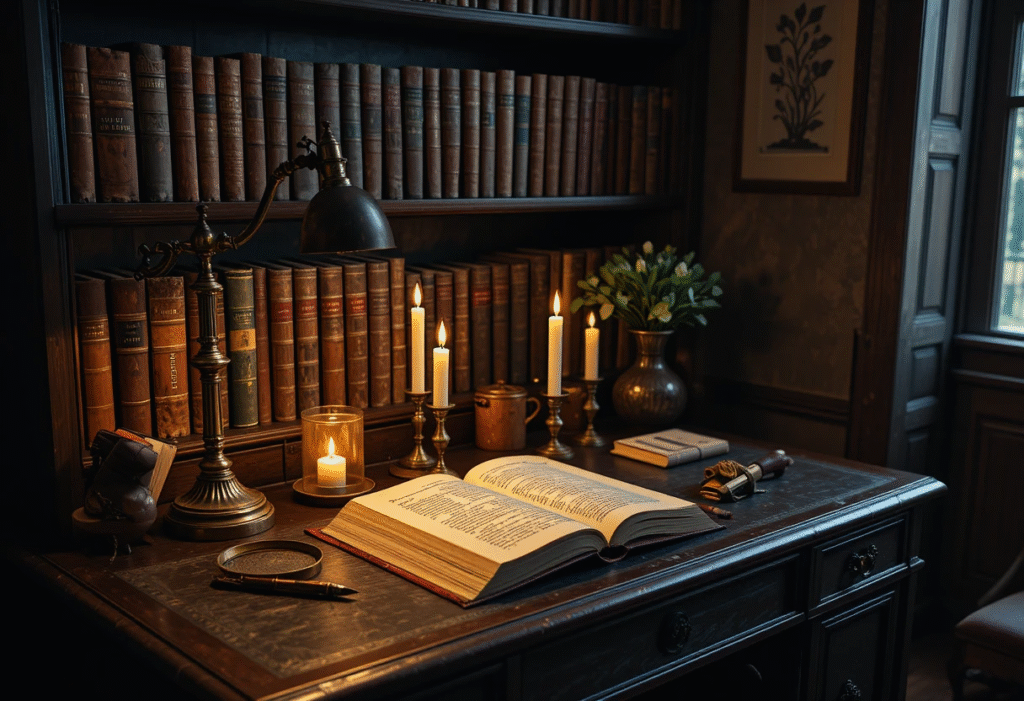
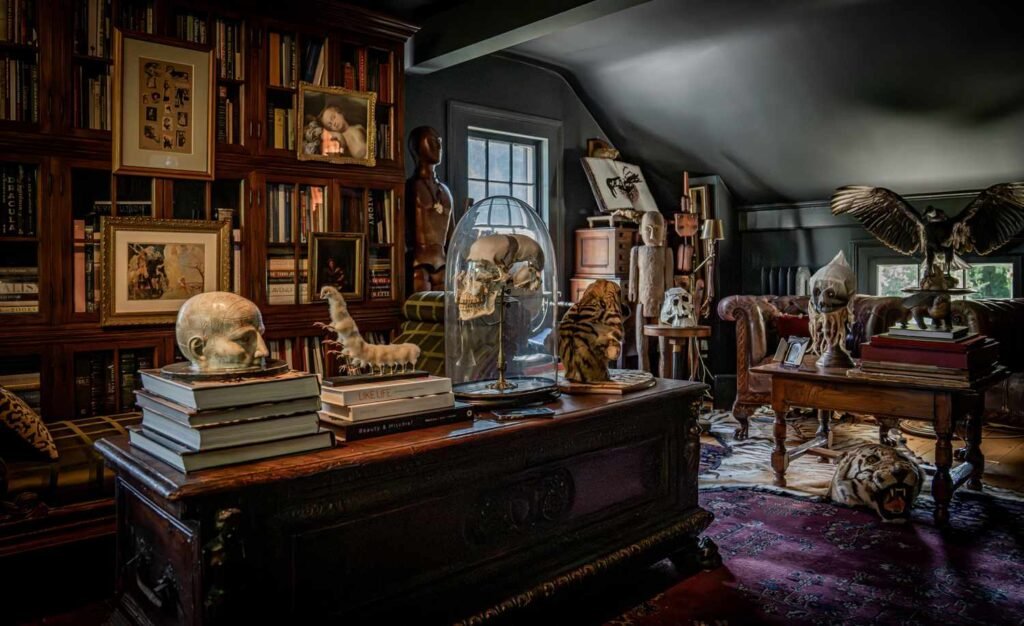
The Dark Academia aesthetic has transcended its origins as a social media subculture to become a sophisticated interior design movement. Unlike modern minimalism, which prioritizes “less is more,” Dark Academia celebrates the “maximalism of the mind.” It is the romanticization of the scholarly life, evoking the atmosphere of ancient European universities, dimly lit libraries, and the quiet intensity of late-night research. When exploring Dark Academia living room ideas, one must look beyond simple furniture; one must look toward the creation of a mood—a sanctuary for the introvert, the dreamer, and the lifelong learner.
1. The Core Philosophy: Why Dark Academia?
Before selecting a sofa or a rug, it is essential to understand the “soul” of this aesthetic. Dark Academia is rooted in Bibliophilia (the love of books) and Gothic Revival architecture. It values the aged over the new, the analog over the digital, and the complex over the simple.
The Psychology of a Moody Space
A Dark Academia living room is designed for introspection. The deep color palettes and low-light environments are psychologically grounding. In an age of digital overstimulation, these spaces offer a “sensory refuge.” By utilizing Dark Academia living room ideas, you are not just decorating a room; you are constructing an environment that rewards curiosity and honors the past.
The Intellectual Narrative
Every object in the room should suggest a narrative. A globe implies a history of exploration; a collection of dried botanicals suggests a naturalist’s study; a stack of old leather bound books implies a lineage of knowledge. This “curated history” is what separates an authentic Dark Academia space from a merely “dark” room.
2. The Foundation: Mastering the Shadow Palette
The most critical step in implementing Dark Academia living room ideas is the selection of the color palette. If the walls are too bright, the “scholarly gloom” is lost.
Color Drenching and Moody Hues
The modern trend of “color drenching” painting walls, trim, baseboards, and even ceilings in the same dark hue—is a staple of this aesthetic.
-
Forest and Hunter Green: These colors evoke the feeling of ivy-clad university walls and ancient forests. They provide a soothing, organic darkness.
-
Oxblood, Burgundy, and Plum: These rich reds add a visceral warmth and a sense of “inherited luxury.”
-
Charcoal, Slate, and Tobacco: These dark neutrals act as the perfect backdrop for gold-gilded frames and brass accents.
The Technical Importance of Matte Finishes
When choosing paint for your Dark Academia living room ideas, always opt for a matte or “dead flat” finish. Glossy or satin finishes reflect too much light, which can “flatten” the room and ruin the moody atmosphere. A matte finish absorbs light, creating a velvety texture on the walls that enhances the sense of depth and mystery.
3. Architectural Depth: Adding History to Modern Walls
Many enthusiasts of Dark Academia living room ideas live in modern homes with flat, featureless walls. To create the look of an old-world study, you must introduce architectural “cheats.”
DIY Wainscoting and Molding
Adding wood paneling or wainscoting to the lower half of your walls instantly provides a “historic” anchor. For renters, “peel-and-stick” molding kits can be used to create the appearance of traditional picture frame molding. When painted the same color as the wall, these details add shadows and highlights that are essential for the Gothic Revival look.
Trompe l’œil and Textured Wallpapers
Trompe-l’œil (a visual illusion in art) is a powerful tool in the Dark Academia toolkit. Wallpapers that mimic the look of 3D library shelves, aged leather, or embossed damask can transform a sterile room into a historic chamber for a fraction of the cost of real wood paneling.
4. The Library Wall: The Focal Point of the Room
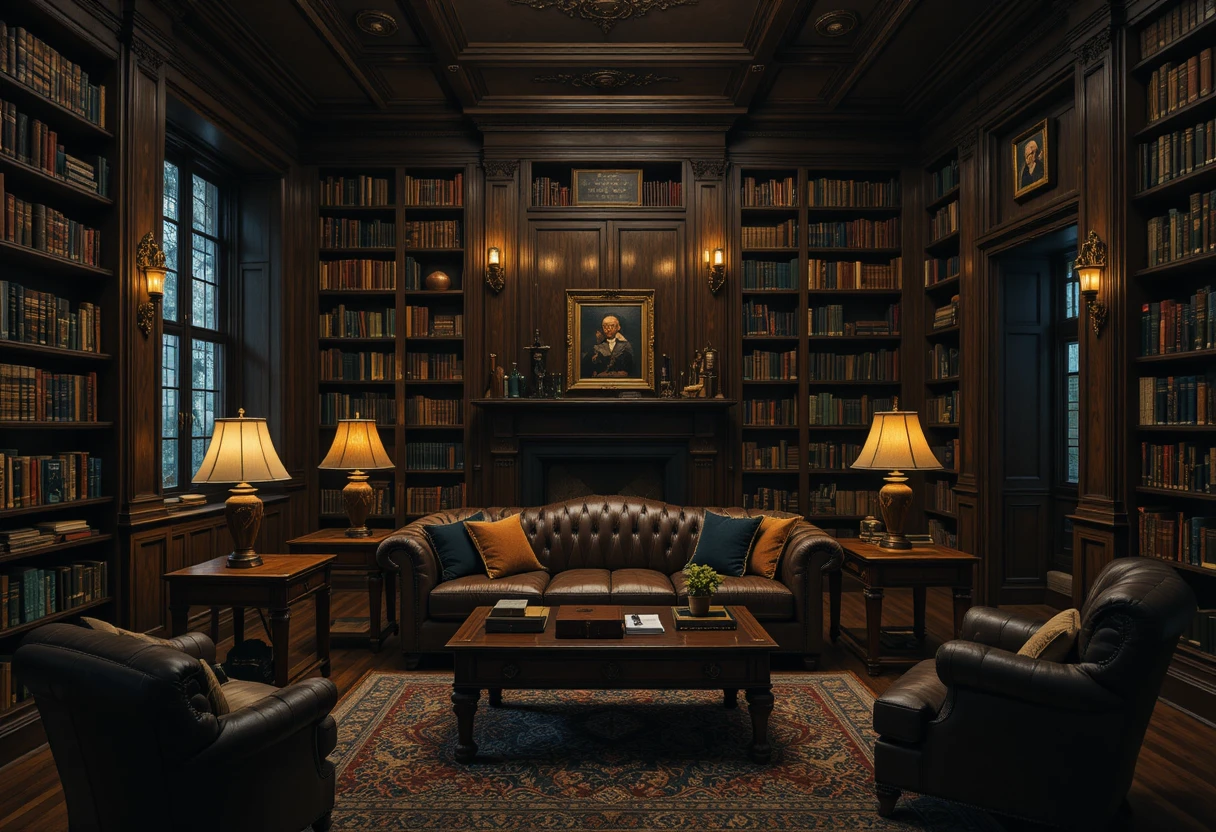
In a living room, the “hearth” is traditionally the fireplace. In Dark Academia, the “hearth” is the bookshelf.
Maximalist Book Storage
To truly execute Dark Academia living room ideas, you need an abundance of physical books.
-
The Floor-to-Ceiling Look: Use tall, dark wooden bookcases. If using affordable options like the IKEA Billy, customize them with crown molding at the top to make them look like built-in features.
-
Curating the Spines: While all books are welcome, cloth and leather-bound editions are the gold standard. If you have bright, modern paperbacks, consider turning them “spine-in” (showing the pages) for a neutral, vintage look, or remove the dust jackets to reveal the more academic covers beneath.
Styling the “Intellectual Shelf”
A bookshelf should not just hold books; it should be a “Cabinet of Curiosities.” Interspersed among the volumes, add:
-
Statuary Busts: Plaster or resin busts of philosophers like Socrates or poets like Sappho.
-
Apothecary Jars: Glass jars filled with dried lavender, old fountain pens, or unique pebbles.
-
Clocks and Globes: Mechanical clocks and aged globes add to the sense of “academic time.”
5. Furniture Selection: The Anchors of the Academic Room
To achieve a true Dark Academia living room ideas setup, furniture must possess “visual weight” and a sense of history. You are looking for silhouettes that feel grounded, traditional, and slightly timeworn.
The Chesterfield Sofa: A Design Icon
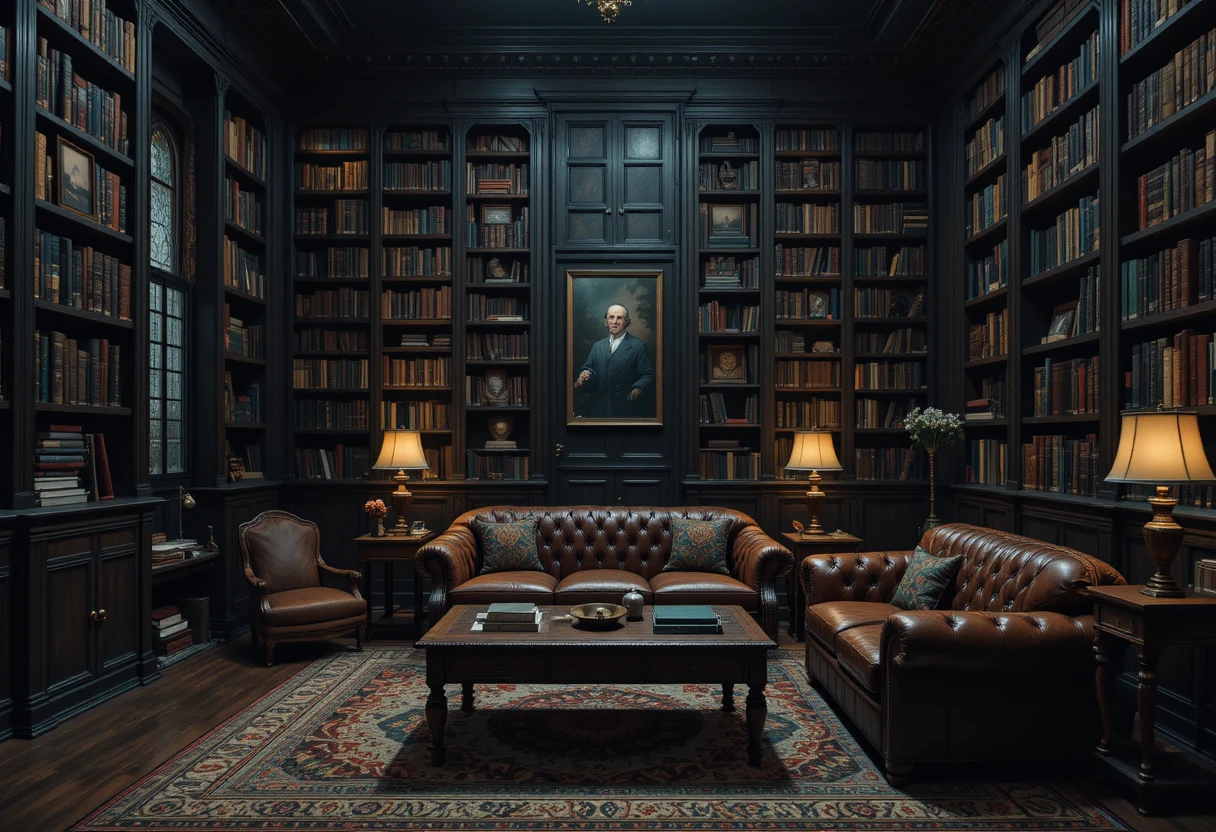
The tufted Chesterfield sofa is the undisputed king of Dark Academia seating. Its deep-set buttons, rolled arms, and nailhead trim provide a structured yet opulent look.
-
Material Matters: Olive green, navy blue, or deep burgundy velvet offers a luminous glow in dimly lit rooms. Alternatively, aged leather in tobacco or espresso brown provides a “professor’s office” vibe that only improves with wear and tear.
-
Styling Tip: Pair the sofa with a mismatched wingback chair in a contrasting fabric (e.g., leather sofa with a tweed chair) to create an eclectic, “collected-over-time” appearance.
The Central Library Table and Coffee Table
In a scholarly living room, the coffee table should be more than just a place for a remote. It should be a surface for giant art books and research materials.
-
Burl Wood and Mahogany: Look for tables with rich grain patterns. A round burl wood table softens the sharp lines of bookshelves, while a dark mahogany table with carved legs reinforces the Gothic Revival influence.
-
Proportions: Ensure your coffee table is approximately one-half to two-thirds the length of your sofa and sits at a height of 16–18 inches for comfortable access.
The Secret Study Nook
Even in a living room, you can implement Dark Academia living room ideas by creating a “room within a room.” A small, dark wood writing desk or a secretary desk tucked into a corner instantly transforms the space. This desk should be the stage for a vintage typewriter, a rotating globe, or a set of ink pots, serving as a secondary focal point.
6. Lighting: Mastering the Chiaroscuro Effect
In Dark Academia, light is a precious resource. You want to avoid “flat” lighting at all costs. Instead, focus on Chiaroscuro—the intentional contrast between deep shadows and warm, localized pools of light.
The Three-Layer Lighting System
To achieve a professional layered lighting effect, you must incorporate three distinct sources:
-
Ambient (The Glow): Skip the ceiling fan light. Instead, use a dimmable, candle-style chandelier or a brass pendant. This should only provide enough light to navigate the room safely.
-
Task (The Focus): Place pharmacy lamps or brass banker’s lamps near reading chairs and desks. These should cast a direct, warm light (2700K) onto your book or workspace.
-
Accent (The Drama): Use picture lights mounted above your favorite oil paintings and LED shelf lighting tucked behind the molding of your bookcases. This highlights your collections and adds depth to the “shadow palette.”
Color Temperature and Ambiance
Always use bulbs in the 2700K to 3000K range. This mimics the warm, amber glow of firelight and is far more flattering to dark wood and velvet than the “cool blue” light found in modern offices. For the ultimate Dark Academia living room ideas experience, use smart bulbs that can dim to 10% brightness for late-night reading sessions.
7. Textiles and Materials: The Tactile Experience
Dark Academia is as much about how a room feels as how it looks. You want a variety of rich, natural materials that invite you to sink in and stay for hours.
Rugs: Grounding the Space
A bare floor feels cold and modern. To ground your Dark Academia living room ideas, you need a rug with a history.
-
Oriental and Persian Patterns: Look for rugs with intricate medallions and vine motifs in oxblood, navy, and cream. A slightly faded, vintage rug is better than a brand-new one.
-
Material Choice: Dense wool rugs are the gold standard. They are durable, naturally stain-resistant, and provide excellent acoustic dampening—perfect for creating a “quiet library” atmosphere.
Window Treatments: Velvet and Drama
Windows should be framed with heavy velvet drapes. Not only do these block out the distracting modern world, but they also add a theatrical sense of grandeur.
-
Installation Hack: Hang your curtain rods 6–10 inches above the actual window frame and let the velvet “puddle” slightly on the floor. This makes your ceilings appear much higher and creates a more dramatic, historic silhouette.
Layering Throws and Pillows
Layering is the key to coziness. Mix tweed and plaid blankets with velvet throw pillows. Use a chunky wool knit over the arm of your leather chair. These “preppy” textures provide a sense of warmth that balances the gloom of the dark walls.
8. The Curiosity Gallery: Wall Decor as Intellectual Narrative
In a living room, your walls are the boundaries of your world. For Dark Academia living room ideas, the walls should not be empty; they should be a high-density archive of your interests.
The Anatomy of a Scholarly Gallery Wall
A Dark Academia gallery wall is distinct from a modern one. It should feel “organic,” as if it grew over decades of collecting.
-
The Subjects: Mix anatomical sketches, vintage botanical illustrations, and celestial maps. These suggest a mind that is curious about the natural and physical world.
-
The Frames: This is where you implement maximalist principles. Use a variety of frames—ornate gold-gilt, dark walnut, and even simple black metal. The lack of uniformity suggests an “inherited” collection rather than a store-bought set.
-
The Layout: Keep the spacing tight (about 2–3 inches between frames). This creates a single, massive visual statement rather than scattered pieces.
Incorporating 3D Elements
Don’t limit yourself to flat art. Truly sophisticated Dark Academia living room ideas involve mounting 3D objects directly to the wall:
-
Taxidermy and Specimen Boxes: Faux animal skulls or butterflies under glass.
-
Antique Clocks and Mirrors: A central Baroque-style mirror reflects candlelight and makes the dark room feel larger.
-
Wall-Mounted Busts: Small plaster or resin busts on floating shelves provide a classical, museum-like atmosphere.
9. DIY Projects: Crafting the “Ancient” Look on a Budget
If you are a student or on a budget, you can still achieve a high-end look through these specific DIY Dark Academia living room ideas.
The “Ancient Manuscript” Tutorial
Create custom wall art from public domain sketches:
-
The Brew: Make a pot of very strong black tea or coffee.
-
The Soak: Submerge standard printer paper (printed with a sketch of a Greek statue or a skeletal hand) in the liquid for 10 minutes.
-
The Bake: Place the wet paper on a baking sheet and “bake” at 200°F (95°C) until dry and crinkled.
-
The Finish: Carefully singe the edges with a lighter for a “rescued from a fire” look. Frame this in a thrifted gold frame for an instant artifact.
Distressing New Frames
Transform cheap, plastic, or light-wood frames into heavy, antique-looking ones:
-
Sandpapering: Lightly sand the edges of the frame to remove the modern finish.
-
Rub ‘n Buff: Use “Antique Gold” or “European Gold” metallic wax. Apply with your finger to the raised edges. This creates a high-end patina that looks like authentic 19th-century gilding.
10. Technical Glossary: 10 Terms for the Academic Designer
we incorporate these 10 technical terms that every enthusiast of Dark Academia living room ideas should master:
-
Bibliophilia: The passionate love of books; the core value of Dark Academia.
-
Chiaroscuro: The design technique of using strong contrasts between light and dark to achieve a sense of drama.
-
Gothic Revival: An architectural style (1740s–1800s) that influences the pointed arches and dark wood seen in this aesthetic.
-
Wainscoting: Wooden paneling on the lower half of walls, providing architectural texture.
-
Ephemera: Vintage paper items (maps, tickets, letters) used as decorative elements.
-
Patina: The visible aging on the surface of brass, copper, or wood, indicating history and quality.
-
Maximalism: The design philosophy of filling a space with collections, art, and layers.
-
Cabinet of Curiosities: A pre-modern museum; a collection of extraordinary objects displayed in a scholarly fashion.
-
Apothecary Aesthetic: Using dark glass bottles and scientific labels to store items.
-
Trompe-l’œil: A visual illusion in art or wallpaper that looks like 3D objects (e.g., a “library” wallpaper).
11. FAQ for Dark Academia Living Rooms
This section is to address the most common queries about implementing Dark Academia living room ideas.
Q: Can I achieve Dark Academia if I have white walls and can’t paint? A: Yes. This is a common struggle for renters. Focus on “textural masking.” Cover large wall areas with floor-to-ceiling velvet drapes. Use tall, dark wooden bookshelves to hide as much white wall as possible. Large-scale tapestries (vintage maps or botanical prints) can also act as “removable walls.” Additionally, prioritize Dark Academia living room ideas like oversized area rugs and dark-colored furniture to ground the space.
Q: How do I prevent my dark room from feeling “gloomy” in a depressing way? A: The key is warmth. Balance the “dark” with warm metallics (brass, gold) and natural elements (plants, wood). Incorporate Dark Academia living room ideas like “living textures”—a crackling fire, a warm-mist humidifier, or the scent of cedarwood and tobacco. Lighting is also crucial; use warm-toned bulbs (2700K) to ensure the darkness feels like a cozy embrace rather than a cold basement.
Q: What are the best plants for a low-light Dark Academia living room? A: Since these rooms are intentionally dark, choose plants that thrive in low-light conditions. Snake Plants, ZZ Plants, and Ivy are perfect. Ivy is particularly aesthetic as it mimics the look of university buildings. If your room is very dark, consider high-quality dried flowers or preserved moss in glass apothecary jars.
Conclusion: Building Your Intellectual Legacy
Executing Dark Academia living room ideas is a continuous journey of curation. It is not about buying a “set” of furniture; it is about building a sanctuary for your curiosity. By focusing on deep color drenching, mastering Chiaroscuro lighting, and embracing the maximalist joy of books and art, you turn your home into a living history. Start with one candle, one old book, and one dark wall, and let your scholarly sanctuary grow.