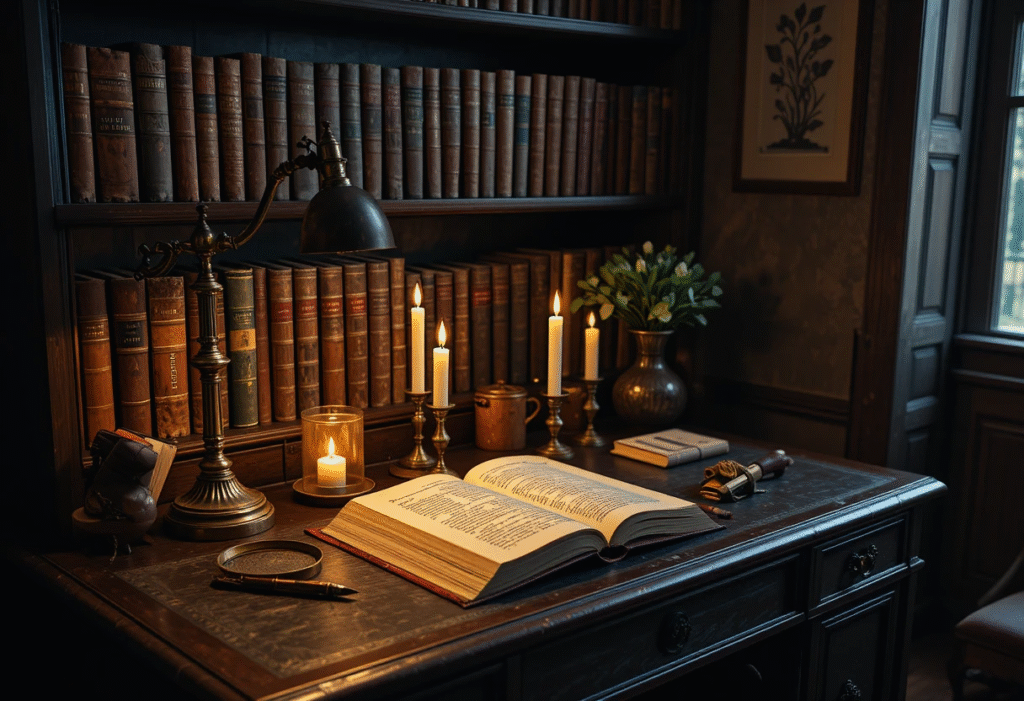
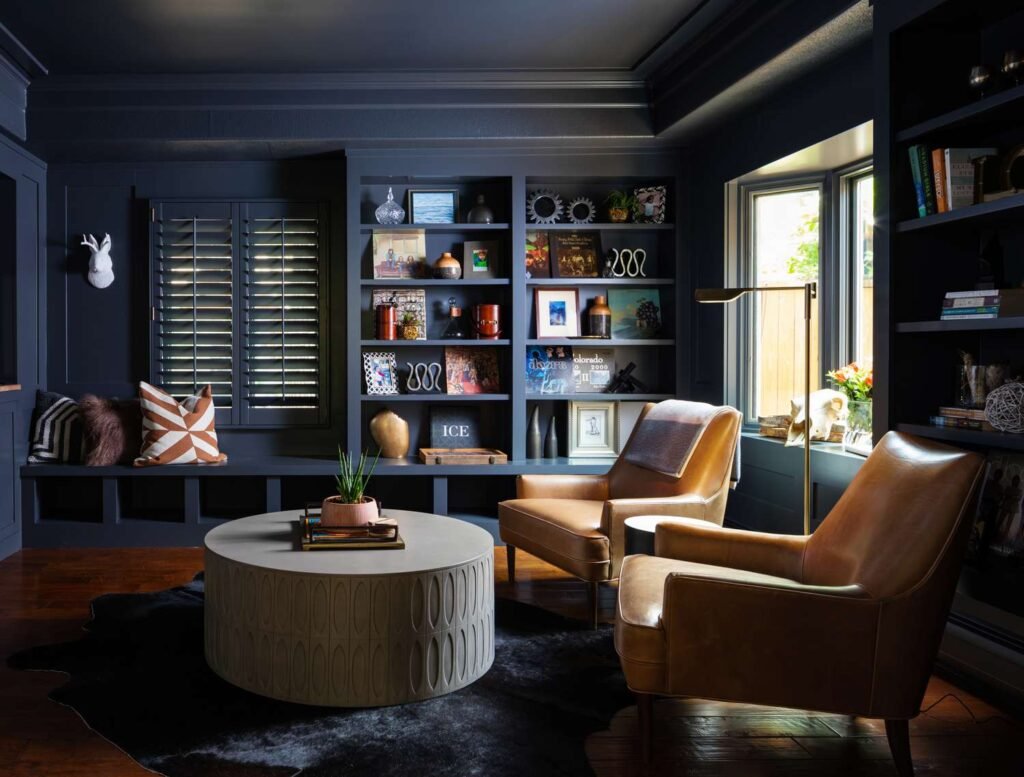
The walls of a room are its boundaries, but in the world of Dark Academia wall decor, they are windows into the soul of the scholar. To the uninitiated, these walls might simply look “busy,” but to the enthusiast, they represent a curated timeline of human achievement, artistic struggle, and scientific discovery. Mastering the art of the scholarly wall requires a balance of color drenching, historical textures, and a high-density approach to art and ephemera.
1. The Foundation: Preparing the Vertical Canvas
Before a single frame is hung, the wall itself must set the stage. In Dark Academia wall decor, the background is just as important as the foreground.
The Psychology of Deep Tones
To achieve an authentic academic feel, you must move away from modern, reflective whites. The goal is to create a “light-absorbing” environment.
-
Forest Green and Midnight Blue: These colors suggest the quiet dignity of an old university library.
-
Oxblood and Burgundy: These provide a rich, visceral warmth that pairs perfectly with aged wood.
-
Charcoal and Graphite: The ultimate neutral for highlighting gold-gilded frames.
Adding Architectural History
If your walls are flat and modern, use Dark Academia wall decor techniques to add artificial history:
-
Removable Wainscoting: Use “peel-and-stick” molding to create the look of traditional wood paneling on the lower half of the wall.
-
Textured Wallpaper: Opt for patterns that mimic leather, damask, or even aged plaster.
2. The Anatomy of a Dark Academia Gallery Wall
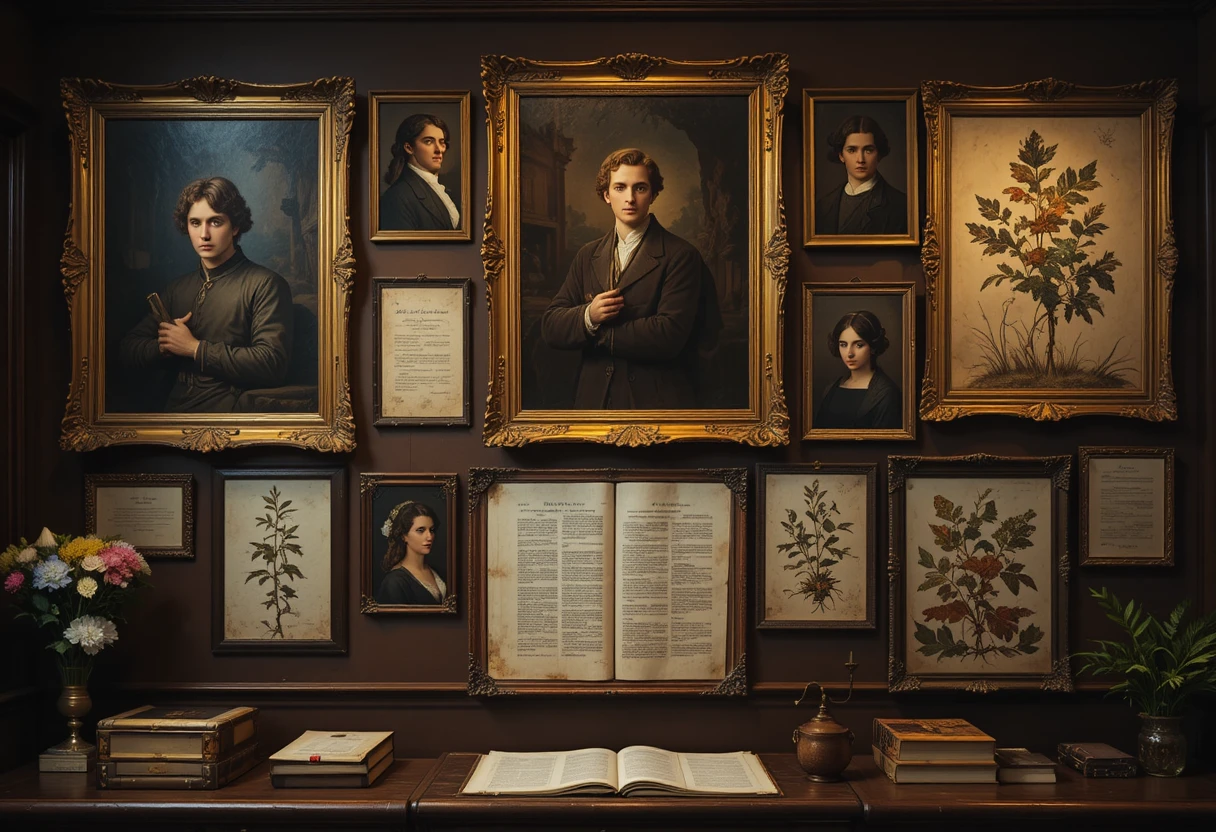
The most iconic element of Dark Academia wall decor is the gallery wall. Unlike a modern gallery, which is often sparse and symmetrical, a Dark Academia gallery should feel organic, dense, and “inherited.”
Selecting Your Intellectual Subjects
What you hang defines your academic focus. Mix and match these subjects:
-
Anatomical Sketches: Detailed ink drawings of the human skeletal system suggest a student of medicine or Da Vinci-esque curiosity.
-
Botanical Illustrations: Pressed flowers or sketches of ferns and fungi suggest a 19th-century naturalist.
-
Vintage Cartography: Maps of cities that no longer exist or celestial star charts from the age of discovery.
-
Classical Sketches: Charcoal or pencil drawings of Greek or Roman busts.
The Frame Game: Mastering the “Inherited” Look
The frame is the “architecture” of the art.
-
The Gilded Age: Seek out ornate, heavy gold frames with “patina” (natural wear and oxidation).
-
Dark Woods: Walnut, mahogany, and ebony frames provide a sober, dignified border.
-
Mixing Shapes: Do not stick to rectangles. Introduce oval frames, small round mirrors, and even hexagonal shadow boxes. This variety is key to the maximalist look of Dark Academia wall decor.
3. Ephemera: The Art of the Intangible
Dark Academia wall decor isn’t just about framed art; it’s about the “paper of life.” Ephemera refers to paper items originally meant to be temporary but kept for their historical value.
Hanging the Paper of History
-
Old Letters and Envelopes: Use wax-sealed envelopes and yellowed letters as small wall accents.
-
Sheet Music: Yellowed pages of Chopin or Beethoven add a layer of tragic romance.
-
Newspaper Cutouts: Specifically from the early 20th century, covering scientific breakthroughs.
Mounting Techniques
To maintain the damage-free requirement for many students, use washi tape in dark colors or small, brass-colored binder clips hung from tiny clear hooks. This allows the paper to look like it was “pinned by a researcher” rather than staged by a designer.
4. Lighting the Vertical Surface: Chiaroscuro in Practice
Even the best Dark Academia wall decor will fail if it is lit by a harsh, blue-toned LED ceiling light. The lighting must be intentional.
Picture Lights and Brass Sconces
If allowed, install battery-operated, warm-LED picture lights above your largest frames. The directed, downward glow creates the “museum at night” feel. This is a classic implementation of Chiaroscuro—the treatment of light and shade in a room.
The Glow of Shadows
Use wall-mounted candle sconces (with flameless LED tapers). The goal is to leave the corners of the room in shadow while highlighting specific “intellectual islands” on your walls.
5. Functional Wall Decor: The Vertical Library
In a small dorm room, your walls must do double duty: look beautiful and store your library. Vertical storage is the ultimate Dark Academia wall decor hack.
Floating Shelves as Art
Use dark wooden floating shelves to create a “sky high” library.
-
Visual Weight: Stack books both vertically and horizontally. This creates a more dynamic look than a standard library shelf.
-
Bookends: Use stone busts or heavy brass bookends to secure your volumes.
The Academic Pegboard
A modern pegboard can be made “academic” by painting it a deep matte charcoal. Use it to hang:
-
Vintage Scissors and Compass Sets.
-
Magnifying Glasses on ribbons.
-
Small Apothecary Jars filled with dried botanicals.
6. Frequently Asked Questions
we address the specific queries users have about this vertical aesthetic.
Q1: How do I hang Dark Academia wall decor on cinder block walls?
A: Use heavy-duty adhesive strips or “mounting putty.” For heavier frames, consider hanging a large piece of corkboard or pegboard first using industrial adhesive, then pinning your decor into that board. This protects the wall while allowing for a maximalist display.
Q2: What if I can’t paint my walls for the Dark Academia look?
A: Focus on “textural masking.” Use floor-to-ceiling velvet drapes in forest green or burgundy to cover large wall areas. This creates the moody atmosphere without a single drop of paint. Additionally, large-scale tapestries featuring vintage maps or botanical prints can cover significant wall space.
Q3: How do I make a gallery wall look “academic” rather than “cluttered”?
A: The secret is cohesion through frames. While you should mix shapes, try to keep the color palette of the frames consistent (e.g., all antique gold and dark wood). Keep the spacing between frames relatively tight (2-3 inches) to make the collection feel like one singular unit rather than scattered pieces.
7. 10 Technical Terms for the Scholarly Wall
-
Gothic Revival: The architectural style emphasizing dark wood and pointed motifs.
-
Patina: The visible aging on brass or wood that indicates authenticity.
-
Trompe-l’œil: Visual illusion in wallpaper that looks like 3D objects.
-
Chiaroscuro: Using high-contrast light to create drama on the wall surface.
-
Bibliophilia: The love of books, expressed through wall-mounted libraries.
-
Wainscoting: Protective and decorative wood paneling on the lower wall.
-
Ephemera: Vintage paper items used as temporary yet meaningful decor.
-
Maximalism: The design theory of filling a space with layers and collections.
-
Herringbone: A classic fabric pattern that can be used for wall panels.
-
Apothecary Aesthetic: Using scientific bottles and labels as wall-mounted curiosities.

DIY: Creating History from Scratch
Aging Paper for Custom Wall Art
If you cannot find authentic vintage prints, you can create them.
-
The Brew: Make a pot of very strong black tea or coffee.
-
The Soak: Submerge standard printer paper (with a printed anatomical sketch) in the liquid for 5-10 minutes.
-
The Bake: Place the wet paper on a baking sheet and “bake” at the lowest possible oven setting until dry and crinkled. This adds the patina of age instantly.
Restoring Thrifted Frames
Find cheap, ugly frames at a thrift store and use “Rub ‘n Buff” in Antique Gold. Apply with your finger to the raised edges of the frame. This creates a high-end, gilded look for pennies, making it an essential part of your Dark Academia wall decor strategy.
Conclusion: Your Vertical Legacy
Dark Academia wall decor is the ultimate expression of the scholar’s mind. It is about surrounding yourself with the giants of history, science, and art. By focusing on deep color drenching, curated gallery walls, and the clever use of vertical space, you can turn a modern room into a timeless refuge.
Whether you are using Command strips to protect your dorm walls or installing permanent wainscoting in a home, the goal remains the same: to create a space that inspires curiosity and rewards the studious eye. Start with one frame, one book, or one map, and let your intellectual journey grow across your walls.