
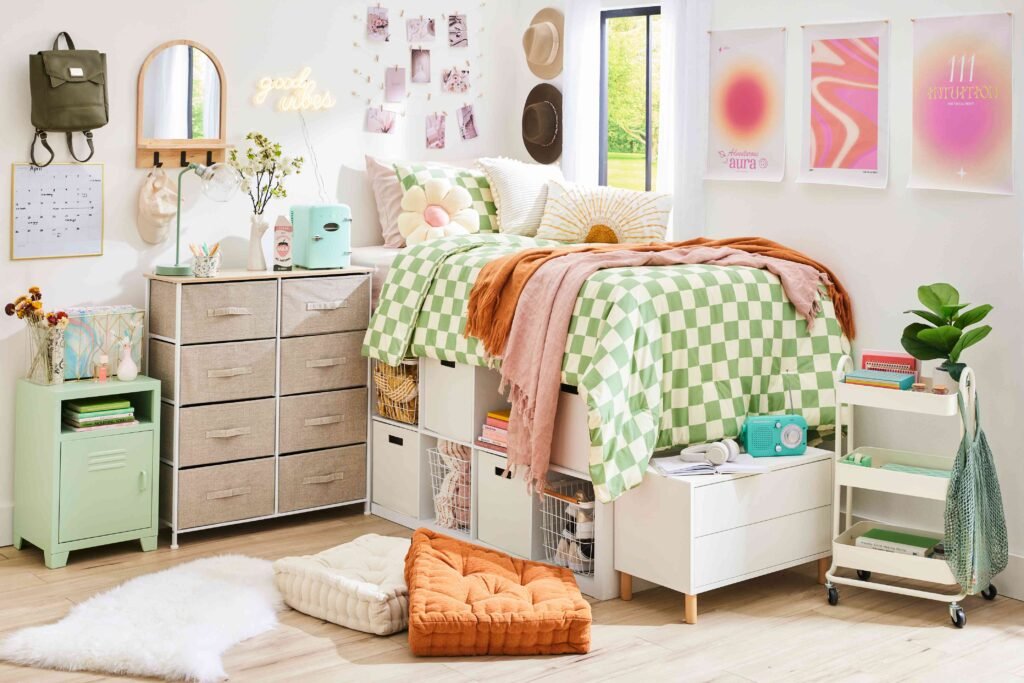
The moment you first step into your new college dorm, one reality hits hard: it’s tiny. That small box you’ve been assigned is now your bedroom, your study hall, your dining area, and your social hub for the next nine months. Trying to fit an entire life including clothes, books, technology, and essentials into such a limited footprint can feel impossible, quickly leading to stress and clutter. Get more information about Small Dorm Room Organization here.
Fortunately, mastering small dorm room organization ideas is less about buying expensive furniture and more about applying smart strategies. This comprehensive, 4000-word guide is designed to transform your cramped quarters into a functional, spacious, and stress-free environment. We will dive deep into every corner, from the closet to the desk, ensuring you have the knowledge and the hacks to maximize storage in a small dorm room on a student budget. By following these proven organizational principles, you won’t just keep your room clean; you’ll create a powerful foundation for academic success and personal well being.

Decluttering and Pre Move In Planning
Before you buy a single bin or container, the most effective step in small dorm room organization is a radical edit of what you bring with you. You cannot organize clutter; you can only move it around. This critical phase focuses on minimizing your possessions before they even cross the threshold of your new room.
Tips for Decluttering Before College Move In
College is a marathon, not a sprint, and your packing list should reflect that. Think about what you truly need versus what you might need. Use the One-Year Rule: If you haven’t used an item, piece of clothing, or book in the last year, chances are you won’t need it at college, especially considering the temporary nature of dorm life.
-
Wardrobe Audit: Separate your clothes into three piles: essential warm weather, essential cold weather, and non-essential. Bring only the essential piles. You can swap out seasonal clothes when you visit home during breaks. This is a crucial step in preparing for creative closet organization for small dorms.
-
Paperless Policy: Convert physical notes, textbooks, and documents to digital files where possible. Hard copies take up precious desk and shelf space. Furthermore, cloud storage is infinitely better than physical folders in a tiny room.
-
The “One-In, One-Out” Rule: As you purchase new essential space-saving products for dorms, make a commitment to yourself. If you bring a new decorative item or piece of clothing into your room, try to remove one old item. This sustainable habit helps maintain order long-term.
Packing Strategically for Easy Unpacking
Your storage solution starts before you move. Instead of packing boxes, use multi-purpose containers that can function as storage once you unpack.
-
Under-Bed Bins as Suitcases: Purchase the low-profile, stackable plastic bins (look for ones that are 6-7 inches high) that you plan to use for best under-bed storage solutions for college. Pack your belongings directly into these bins. When you arrive, simply slide them under the bed. This saves the time and space needed to store empty cardboard boxes.
-
The Go-To Essentials Kit: Pack a single “first-night” bin. This should include toiletries, bedding, a towel, phone charger, and a change of clothes. You can quickly unpack this bin while the rest of your items wait their turn, reducing immediate chaos.
-
Utilize Luggage: Remember that suitcases and duffel bags take up space. Once unpacked, store these empty items under your bed or in the back of your closet. They are excellent containers for bulky seasonal clothes or sentimental items you won’t need daily.
Once you’ve pared down your belongings, the next step is to redefine where they live. The biggest mistake most students make is only organizing on the floor. The greatest secret weapon in any tight space is often ignored: vertical space. Your small dorm room walls and the back of your door are prime, unused real estate. Smart college students know how to look up and out when square footage is limited. This section is dedicated to implementing vertical storage ideas for college students, a crucial strategy for making a tiny space feel huge.
The Power of Over-the-Door Organizers
For many students, the first and most critical purchase is an over-the-door organizer. This simple, inexpensive item can immediately double the storage capacity of your door. But don’t just use it for shoes! Get creative.
-
For the Closet Door: Use a clear pocket organizer for scarves, socks, belts, or even folded jeans. Labeling each pocket can transform this into a powerful dresser substitute.
-
For the Main Door: Use an organizer with deeper pockets for snacks, water bottles, keys, and charging cords. This is an efficient way to keep frequently used items accessible without cluttering your desk. This also helps with organizing dorm room bathroom and toiletries—simply hang a pocket organizer on the back of the bathroom door or near the sink area for shared items.
-
Importantly, the beauty of this solution is its impermanence; you can simply take it down at the end of the year without leaving any damage.
Command Strips: Your Damage-Free Organization Army
The fear of losing your security deposit often limits utility in a dorm. Thankfully, adhesive products like Command hooks and strips are universally accepted and are truly game-changers for any student aiming to maximize storage in a small dorm room.
You can use these damage-free solutions for far more than just hanging posters. They can support significant weight, turning plain walls into functional zones:
-
Desk Organization: Install a few hooks near your desk to hang headphones, charging cables, and a lightweight calendar.
-
Kitchenette: Use strips on the side of a mini-fridge to hang lightweight utensils or an oven mitt (if permitted to have a microwave).
-
Small Shelves: Use heavy-duty Command strips to affix lightweight floating shelves for displaying plants or small books, dramatically enhancing the aesthetics and utility of the space.
Going Up: Lofting Beds and Desk Hutches
When floor space is nonexistent, you must go high. If your dorm bed is adjustable, lofting your bed is the single best way to create an entirely new zone in your room. This instantly frees up the area underneath for a desk, a reading chair, or extra storage shelves. This is the ultimate space-saving technique.
A desk hutch, which sits atop your existing desk, is another excellent vertical solution.1 It provides shelving for books, school supplies, and decorations without eating up any valuable desktop space needed for studying. Furthermore, pairing a hutch with vertical file sorters on the desk ensures that papers and notebooks are stored upright, saving the maximum amount of surface area for your laptop and assignments.
The area beneath your bed is arguably the most valuable, high-volume storage zone in your entire room. In the pursuit of brilliant small dorm room organization ideas, transforming this hidden cavity from a dust bunny repository into a hyper-efficient storage hub is absolutely essential. We will explore two primary strategies here: lifting your bed and choosing the correct containers.
:max_bytes(150000):strip_icc()/SPR-how-to-make-dorm-room-functional-relaxing-5649206-hero-ee04000729fd4f71ac65ad91a11f6275.jpg "Small Dorm Room Organization Ideas & Tips")
Best Under Bed Storage Solutions for College: The Container Game
To successfully leverage this space, you must first ensure you have adequate height. Most dorm beds are adjustable, but if yours isn’t, or if you need even more clearance, investing in heavy-duty, stackable bed risers is the key. Look for models that feature built-in electrical outlets or USB ports. This adds practical utility, turning a simple storage solution into a powered charging station, which is a major win for any student.
Once the bed is elevated, you can utilize the space for large, bulky, or seasonal items. Choosing the right container is vital:
-
Low-Profile, Rolling Bins: These are the gold standard. They should have locking wheels so they slide out easily but stay put when tucked away. Use these for heavy winter sweaters, extra linens, or non-perishable snack overflow.
-
Zippered Fabric Bags: These are perfect for storing items that don’t need rigid protection, such as off-season clothes, extra blankets, or pillows. They compress slightly, allowing you to fit more items and maximize the available height.
-
Multi-Purpose Storage: The space can hold far more than just clothes. Slide your emptied suitcases or duffel bags (now acting as dorm storage for seasonal items) directly beneath the frame. You can even strategically place a mini-fridge or microwave under the lofted area to keep it off your valuable floor space.
Maximizing Storage in Small Dorm Room Under the Bed
The organization underneath your bed should reflect what you need most often. Since this area requires pulling out bins, reserve it for items you access weekly or monthly, rather than daily.
-
Zone 1 (Under the Head/Pillow): Ideal for storing sentimental items, important documents (in a small locking file box), or valuable luggage. These are items you rarely need to grab.
-
Zone 2 (Under the Middle): This is the best spot for seasonal clothing changes or extra bedding.
-
Zone 3 (Under the Foot/Near the Door): If you can, use a rolling bin here for non-perishable food items, bulk laundry detergent, or extra school supplies. Because this zone is easiest to access, you might use it for your most frequently accessed overflow items.
-
Furthermore, using clear bins allows you to see what is inside without pulling everything out, saving significant time and frustration. Labeling the ends of the bins (the part facing out) ensures that you and your roommate know exactly where everything is stored. The efficiency gained by properly organizing this often-forgotten area proves that effective dorm organization is about clever planning, not just buying more things. By incorporating these methods, you are leveraging every cubic inch of your room, allowing you to focus on your studies instead of searching for lost items.
The dorm closet is notoriously small, often equipped with a single rod and a shelf. This lack of space can quickly turn your wardrobe into a chaotic mess. To successfully tackle this challenge, we must treat the closet not as a single hanging space, but as a modular system waiting to be maximized.
Slim Hangers and Tiered Systems
The single most effective, budget-friendly change you can make is swapping out thick plastic or wire hangers for slim velvet hangers.
-
Space Saver: Slim velvet hangers reduce the width of your hanging clothes by up to 50%, instantly giving you room for dozens of extra garments. Consequently, your clothes stay on the hanger better, preventing items from slipping onto the floor.
-
Cascading Hangers: For items like skirts, tank tops, or even pants, use cascading or tiered hangers. These allow you to hang five or six items vertically from the space of one hanger, achieving significant vertical storage within the closet itself.
-
Maximize the Shelf: Don’t let the high shelf above the rod go unused. This space is perfect for folding and storing bulkier items, such as denim, sweaters, or towels. Use cubbies or canvas bins to keep these items neat and prevent them from toppling over.
Utilizing the Floor and Door
Every square inch of the closet needs a function. The floor of the closet is often the dumping ground for shoes and dirty laundry, but it can be used more efficiently.
-
The Hanging Hamper Hack: Instead of a floor hamper, use a tall, slim hamper or, better yet, a hanging laundry bag or collapsible hamper that hangs from the closet rod. This keeps dirty clothes off the floor and frees up that space for shoes or drawer units.
-
Shoe Strategy: Skip the large floor shoe rack. Instead, opt for a tiered shelf unit (often designed for kitchen spices) or a simple stackable cubby system. If you have extra wall space inside the closet door, a fabric shoe organizer (similar to the over-the-door organizer we discussed) works wonders for flat shoes and sandals.
-
Drawer Systems: If your dorm room lacks a dedicated dresser, use the closet floor for a rolling cart or a set of plastic three-drawer units. These affordable, lightweight units can house folded clothes, freeing up the hanging rod for coats and delicate items. This truly demonstrates the efficiency of creative closet organization for small dorms.
Desk, Study, and Tech Organization
The desk in a small dorm room is typically the most cluttered area, yet it is arguably the most vital. This is your academic command center, and a disorganized desk directly impacts your focus and productivity. Effective dorm room desk organization for studying is not just about aesthetics; it’s about creating a dedicated, efficient workspace that promotes deep concentration.
Maximizing Desk Surface Area
Because your desk space is limited, the primary goal is to keep items off the horizontal surface. Everything possible should be stored vertically or be multi-functional.
-
Vertical Sorters: Utilize vertical file sorters for notebooks, binders, and folders. These keep papers tidy and easily accessible without stacking them horizontally, which instantly creates visual clutter.
-
Charging Stations: Tech wires are often the biggest culprit of desk chaos. Invest in a dedicated, compact charging station or docking station. This consolidates cables, keeps devices contained in one area, and minimizes the sprawl of cords across your limited space. Use simple adhesive cord clips to run wires discreetly along the back edge of the desk.
-
The Mobile Workstation: Consider using a 3-tier rolling cart (often called a utility cart). This cart is an essential space-saving product for dorms because it can serve as mobile storage for study supplies, art materials, or snacks. When you need extra space on your desk, simply roll the cart out of the way; when you need your supplies, roll it right up beside you.
Smart Storage and Supply Containment
Avoid having pens, highlighters, and sticky notes scattered across your desk. Instead, use drawers and contained systems:
-
Desk Drawer Organizers: If your desk has drawers, use small, modular trays or shallow bins to keep items separated. This prevents the “junk drawer” syndrome.
-
Wall-Mounted Caddies: If allowed, small, clear wall-mounted caddies (using Command Strips) can hold frequently used items like rulers, remote controls, or smaller notebooks. This is another effective implementation of vertical storage ideas for college students.
-
Furthermore, embracing a degree of minimalism on your desk ensures that when you sit down to work, the only distraction is your assignment. Only keep items you use daily within arm’s reach; everything else belongs in a designated drawer, shelf, or bin. This intentional approach dramatically improves the overall organization of the small dorm room.
Roommate Ready: How to Organize a Tiny Shared Dorm Room
If you are sharing your small space with a roommate, organization becomes doubly challenging but also twice as important. Learning how to organize a tiny shared dorm room requires cooperation, clear communication, and the implementation of spatial boundaries. The ultimate goal is peaceful coexistence through structure.

Establishing Boundaries and Dividing Property
The first and most critical step is sitting down with your roommate early on and agreeing on who gets what space.
-
The Midline Rule: Mentally or literally divide the room in half. Each person gets one-half of the floor, one-half of the closet, and half of any shared furniture (like a bookshelf or dresser). Respecting this midline prevents encroachment and future arguments.
-
Color-Coding: Implement a simple color-coding system. If one person uses blue bins and the other uses red, it is immediately clear where items belong. This works perfectly for shared zones like the fridge, the common area shelf, or the laundry baskets.
-
Shared vs. Personal: Clearly define which areas are communal (like the mini-fridge or coffee station) and which are strictly personal (like a desk drawer). Labeling bins and shelves with names can prevent confusion and ensure everyone knows where to put things back.
Budget Friendly Dorm Room Organization Hacks for Two
Sharing a space often means sharing a budget. Here are smart, affordable hacks to ensure organization doesn’t break the bank:
-
Shared Rolling Cart: Instead of each person buying a nightstand, use a single 3-tier rolling cart placed between the two beds. The cart can hold shared items on the middle shelf (like communal snacks or a first-aid kit) and personal items on the top and bottom shelves.
-
Vertical Dividers: If you share a bookshelf, use tension rods or small, lightweight vertical dividers to clearly delineate each person’s books and supplies. Therefore, when one person tidies their side, they won’t accidentally interfere with the other’s setup.
-
Privacy Dividers: While not strictly organization, simple screen dividers or curtains can be hung from the ceiling (using Command Hooks, of course!) to give each person a defined, private space. This psychological boundary makes the small dorm room feel less cramped and more personalized for each occupant. This strategic use of budget-friendly dorm room organization hacks ensures both parties feel respected and organized.
The Ultimate Product Toolkit and Budget Solutions
Successful small dorm room organization relies on utilizing the right tools. Investing in multi-functional, modular, and space-saving products allows you to maximize your storage potential without cluttering the floor. This section highlights the essential space-saving products for dorms that deliver the best return on investment for college students.
Smart, Multi Purpose Furniture
When you have limited square footage, every item must earn its place. Avoid single-purpose furniture.
-
Storage Ottomans: These are perhaps the best example of dual-purpose dorm furniture. An ottoman provides extra seating for guests and lifts its lid to reveal substantial hidden storage for blankets, towels, or shoes. Furthermore, it can double as a small coffee table for snacks.
-
Bedside Caddies: Instead of a traditional nightstand (which takes up floor space), utilize a bedside caddy that slips under the mattress or hooks onto the bed rail. This provides easy access storage for your phone, glasses, remote, and books without occupying any floor space. This is a crucial budget-friendly dorm room organization hack.
-
Modular Cube Organizers: Cube organizers are versatile. You can stack them high (vertical storage), use them as a TV stand, or place them under a desk for shoe storage. Use fabric drawers inside the cubes to contain smaller items and keep the look tidy.
Organizing Dorm Room Bathroom and Toiletries
Even if you share a communal bathroom down the hall, you still need organized storage for toiletries, towels, and cleaning supplies within your room.
-
Shower Caddy: This is non-negotiable. A plastic or mesh shower caddy is essential for carrying your shampoo, soap, and razor back and forth. Look for mesh options, as they dry quickly and prevent mildew.
-
Behind-the-Door Solutions: If you have an ensuite or closet door near your bathroom essentials, use a small, transparent over-the-door organizer for backup supplies like toilet paper, extra soap, and bulk items.
-
Vertical Drawers: Use small, clear plastic drawers on a counter, desk, or shelf to organize makeup, medications, and small personal items. These stack neatly and keep moisture out, proving that even toiletries benefit from great dorm storage techniques.
Final Takeaways & Maintaining the Organization System
We have now traveled through every zone of the small dorm room, transforming chaos into structure through intentional planning, strategic purchases, and leveraging often-ignored spaces. Achieving maximum space utilization is entirely possible, even in the smallest of quarters. However, organization is not a one-time event; it is a discipline that requires continuous effort.
Creating Sustainable Organizational Habits
The key to long-term success is integrating small, daily habits that prevent clutter from overwhelming your system.
-
The 5-Minute Tidy: Before you go to bed each night, take just five minutes to put everything back in its designated place. Hang up the coat, put the book on the shelf, and clear the desk surface. This simple ritual prevents the buildup of massive weekend clutter.
-
Using Bins as Baskets: Make storage containers easy to use. Instead of neatly folding every item, assign an “active bin” for items that need to be put away later, such as mail, library books, or items you borrow from your roommate. This keeps the items off the floor until you have time for a full reset.
-
Regular Review: Schedule a 30-minute “Deep Clean” once a month. This is when you dust, wipe down shelves, and reassess your storage system. Do your current small dorm room organization ideas still work for your needs? If not, adjust the labels, swap the contents of bins, and keep the system fresh.
The Power of Intentionality in a Small Space
Your living environment has a direct impact on your mental health and academic performance. A cluttered room often leads to a cluttered mind, increasing stress during crucial study periods. By intentionally organizing your tiny dorm, you are creating a sanctuary—a peaceful space where you can focus, relax, and recharge.
Remember the core strategies:
-
Declutter First: Only bring essentials into the space.
-
Go Vertical: Utilize walls, doors, and bed risers.
-
Contain Everything: Use modular bins, baskets, and caddies.
-
Communicate: Set boundaries in shared living situations.
The transition to college is a massive undertaking, but by applying these sophisticated small dorm room organization ideas, you ensure that your living situation is a source of comfort and function, not stress. Embracing these dorm hacks will not only make move-in day smoother but will also establish organizational skills that will benefit you long after graduation.
Start Your Organized Journey Today!
-
Therefore, take the time now to inventory your belongings, purchase those essential space-saving products for dorms, and map out your vertical space. A clean, organized room sets the stage for a successful academic year. Don’t wait until clutter starts to impede your studies; take control of your space now!