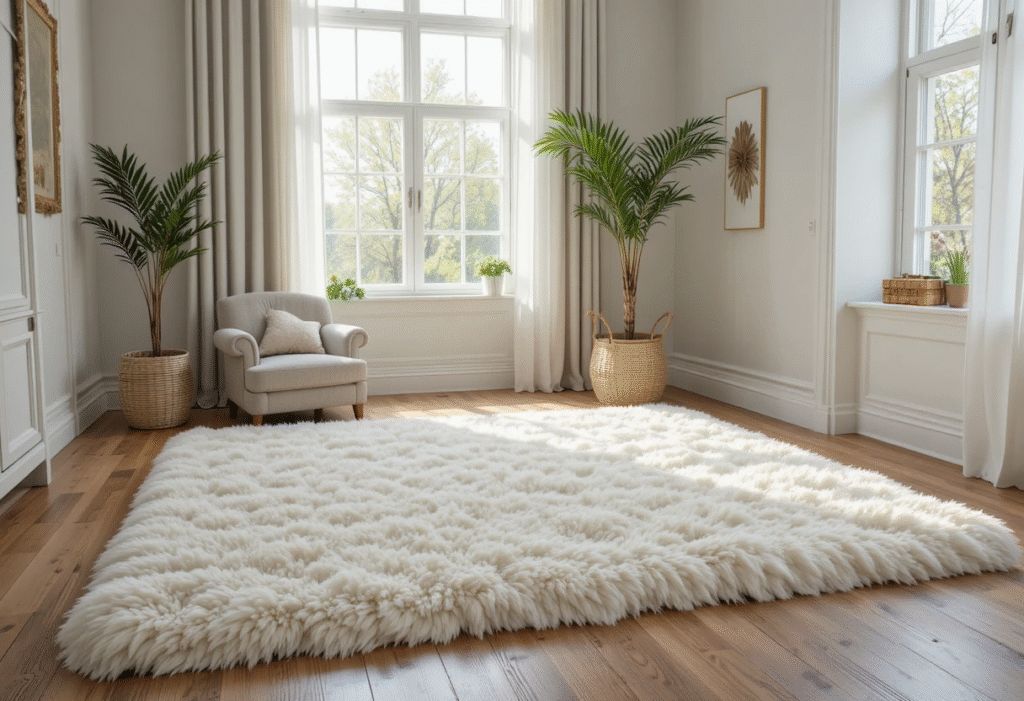
A rug is the foundation of interior design. It defines a space, adds warmth and texture, improves acoustics, and ties your furniture together. However, choosing the perfect rug for every room is often the biggest stumbling block for homeowners. Getting the size wrong can make a room feel either cluttered or unfinished.
This expert guide breaks down the essential rules for selecting the ideal rug based on the function, size, and material requirements of each specific area in your home, ensuring a cohesive and professional look.
Part 1: Sizing and Placement Rules (The Non-Negotiables)
The number one mistake people make is buying a rug that is too small. Follow these proportional rules for an expensive, anchored look.
A. Living Room: The Anchoring Zone
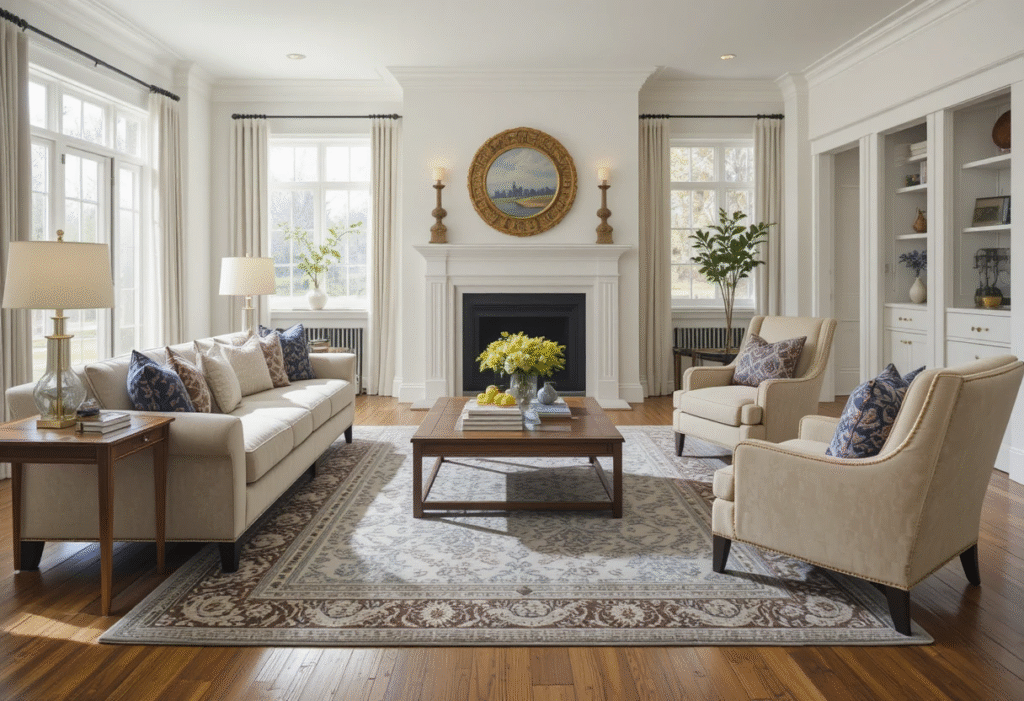
The living room rug must be large enough to hold the furniture grouping together.
| Size Rule | Why It Works | Common Sizes (for average rooms) |
| Front Legs On: The rug must extend at least under the front two legs of your sofa and all accent chairs. | This anchors the entire seating area, making the room feel larger and more intentional. | 8×10 or 9×12 |
| No Floating Furniture: The rug should never be a small “island” floating in the center of the room with all seating pushed against the walls. | A floating rug makes the room look small and disjointed. | 6×9 (Use only if all furniture is small scale). |
| Walkway Clearance: Ensure there is 12–18 inches of exposed floor space around the perimeter of the rug, leading up to the wall. | Provides a clean border and shows off the flooring beneath. |
B. Bedroom: The Foundation of Comfort
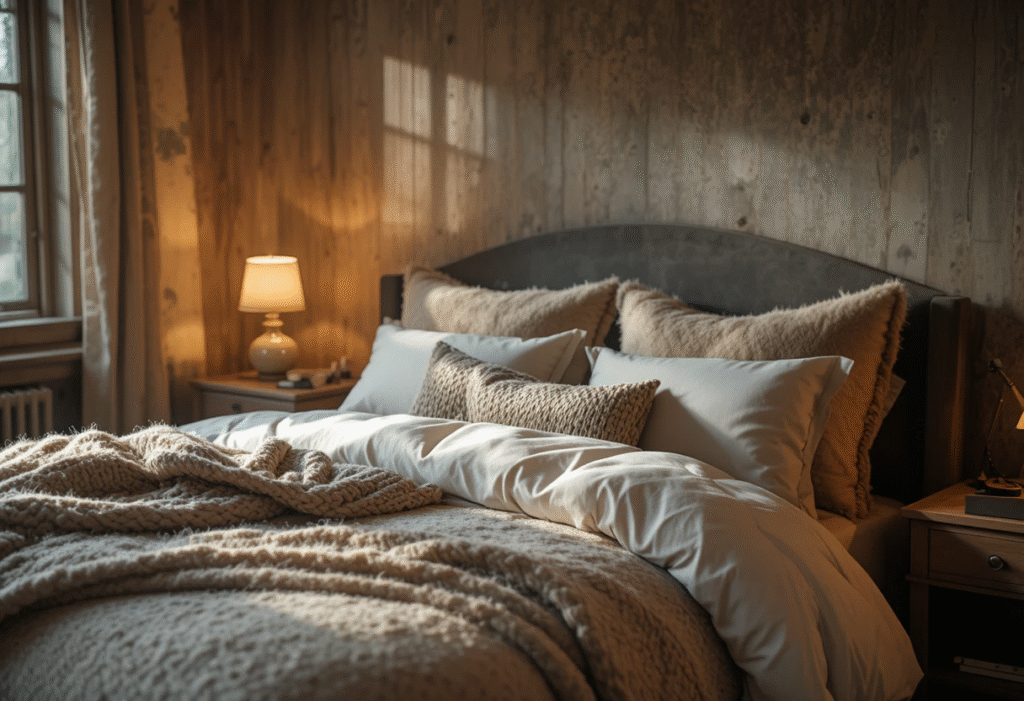
The rug in the bedroom should frame the bed and provide soft texture where your feet land.
-
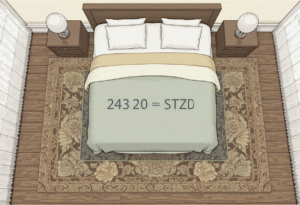
The Proportional Frame: The rug should be placed horizontally under the bed, extending 18 to 24 inches beyond the sides and foot of the bed.
-
Placement Hack: The rug should start either just past the nightstands (exposing the floor beneath them) or fully under the nightstands to anchor them (this requires a larger size).
-
Sizing Reference:
-
Queen Bed: Needs an 8×10 (starts under the nightstands) or a 5×8 (starts just past the nightstands).
-
King Bed: Needs a 9×12 (best fit) or an 8×10 (if placed past the nightstands).
-
C. Dining Room: The Chair Test
The dining room rug must be large enough so that chairs do not catch on the rug’s edge when pulled out.
-
The Rule: The rug must extend at least 24–30 inches beyond the edge of the table on all sides.
-
The Test: Pull a chair out as if you were sitting down. All four chair legs must remain on the rug.
-
Sizing Reference:
-
6-8 Seat Rectangular Table: Needs an 8×10 or 9×12.
-
4-Seat Round Table: Needs a 7-foot or 8-foot round rug.
-
Part 2: Material Selection by Room Function
The perfect rug for every room isn’t just about size; it’s about matching the fiber to the expected traffic, moisture, and cleaning needs.
| Room Function | Material Priority | Recommended Fibers | Avoid |
| High Traffic (Entry/Hallway) | Durability, Low Pile, Hides Dirt | Jute, Sisal, Flat-weave Wool, Indoor/Outdoor Synthetics (Polypropylene) | High Shag, Viscose (sheds easily) |
| Comfort (Bedroom) | Softness, Insulation, High Pile | Wool, Viscose, Cotton, Plush Shag | Jute (too rough) |
| High Spill (Dining/Kitchen) | Stain Resistance, Washability | Polypropylene (best for stains), Washable Cotton/Polyester blends | Silk, Jute (hard to clean liquids) |
| Focal Point (Formal Living) | Texture, Color, Longevity | Wool, Viscose/Wool Blends, High-Quality Synthetic | Cheap, thin acrylic |
Material Spotlight for Budget/Durability
-
Wool: Excellent lifespan, soft, naturally stain-resistant. Best long-term investment.
-
Jute/Sisal: Highly affordable, natural texture. Ideal for layering, but can feel rough under bare feet.
-
Polypropylene (Olefin): The king of affordability and stain resistance. Excellent for homes with pets or children. Modern polypropylene looks very soft and attractive.
Part 3: Styling and Design Tips
4. Color and Pattern Strategy
The rug is the largest piece of soft decor and dictates the room’s mood.
-
For Busy Rooms: If your room has busy wall art, patterned pillows, or colorful furniture, choose a subtle, solid-colored rug with texture (like a plain wool or woven jute) to ground the space.
-
For Neutral Rooms: If your walls and furniture are neutral, the rug is your opportunity to introduce color and pattern (like a bold geometric design or a classic Persian pattern) to inject personality.
5. Layering for Dimension and Budget
Layering is an expert technique that can also be a budget hack.
-
The Budget Layer: Buy a large, cheap jute or sisal rug as your base. Place a smaller, more expensive, soft patterned or faux fur rug (e.g., a 4×6 or a small runner) directly on top in the main seating area. This covers a large footprint affordably while adding visual depth.
6. The Rug Pad Necessity
A rug pad is not optional it protects your floor and extends the life of your rug.
-
Function: A felt or rubber rug pad prevents slipping (safety first!), adds cushioning, and reduces friction, which prevents wear and tear on your rug’s backing and floor.
7. Choosing the Right Pile Height
Pile height affects both feel and function.
-
Low Pile (Flat-Weave): Best for dining rooms and entryways where chairs need to slide easily and cleaning is frequent.
-
Medium Pile (1/2 inch to 3/4 inch): Best for living rooms and bedrooms, offering softness without being difficult to vacuum.
-
High Pile (Shag/Frieze): Best for low-traffic areas like bedrooms or reading nooks, offering maximum coziness.
Final Thoughts: Intentional Investment
Choosing the perfect rug for every room is about making intentional choices regarding scale and material. By committing to the proper sizing rules (front legs on!) and selecting durable fibers like polypropylene for high-spill areas or plush wool for comfort zones, you ensure your rug acts as a beautiful, functional, and long-lasting foundation for your home design.