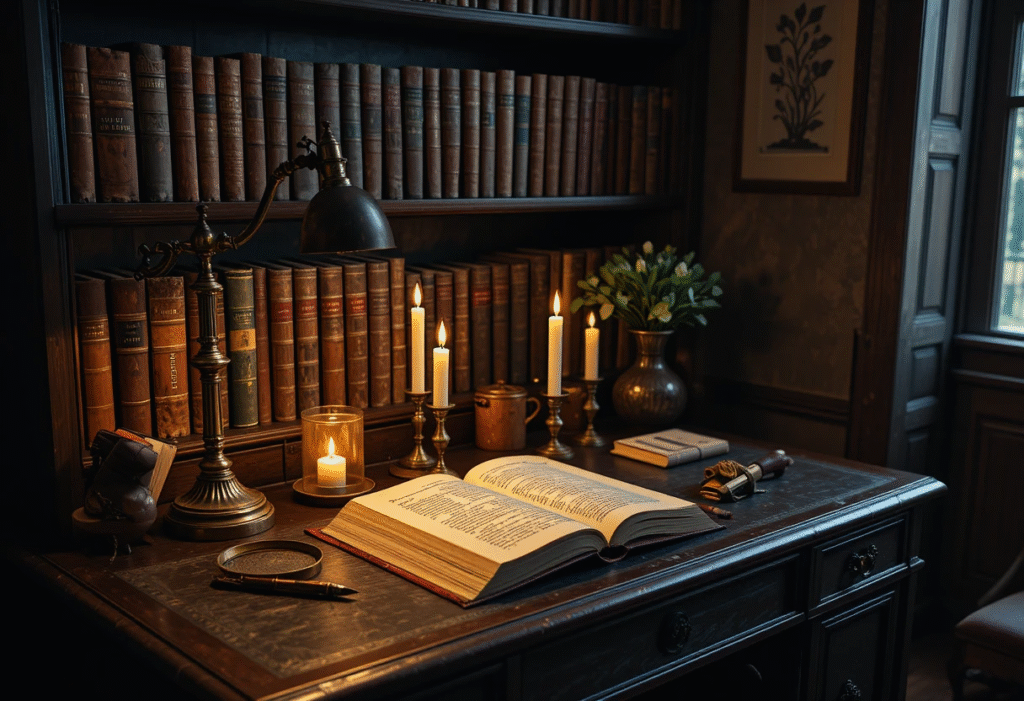

The bookshelf is the single most important element in the Dark Academia aesthetic. It serves not just as storage, but as a visual manifestation of scholarship, history, and moody romance. Learning how to style a dark academia bookshelf is an exercise in intentional clutter—making it look both abundant and highly curated.
Follow these 7 essential layering steps to transform your basic bookcase into a sophisticated, scholarly focal point.
Step 1: Establish the Moody Foundation (Color)
Before placing the first book, ensure your bookshelf has the right atmosphere.
-
The Look: Paint the bookshelf deep, matte colors—charcoal gray, forest green, deep burgundy, or navy blue. If you can’t paint the whole unit, consider painting just the back wall of the shelves a deep color to create instant depth and contrast.
-
The Upgrade: If your shelves are cheap veneer, disguise them by applying a dark wood stain or contact paper to the edges.

Step 2: Curate the Collection (Spine Color)
The aesthetic is achieved through the overall tone of the spines.
-
The Hack: Focus primarily on books with dark, muted spines (black, brown, green, red, cream/aged white, or navy). Hide bright, glossy, or neon-colored dust jackets by removing them.
-
Organization: Group books by spine color, height, or subject matter (e.g., classics, history, poetry). For an authentic look, intersperse leather-bound or dark-cloth books with paperbacks.
Step 3: Master the Vertical and Horizontal Mix
Avoid simply lining books up in straight rows. The key is dynamism and visual rhythm.
-
Verticality (70%): Line up most books vertically. This uses height efficiently.
-
Horizontality (30%): On every other shelf, create horizontal stacks of 3 to 5 books. These stacks act as risers or pedestals for your decorative objects (artifacts).
-
The Effect: This stacking technique creates a layered, lived-in feel, suggesting the shelf is actively being used for study.
Step 4: Introduce Depth with Scholarly Artifacts
Objects are placed in front of the books to add a sense of history and scale.
-
The Accents: Use small objects that evoke the scholarly theme:
-
Small bust sculptures or busts
-
Vintage clocks or antique magnifying glasses
-
Pewter or brass candlestick holders (always with dark or white candles)
-
A small vintage globe or astronomical chart
-
-
Placement: Place artifacts on the horizontal stacks or nestled into the gaps between vertical book groups.
Step 5: Incorporate Natural and Organic Textures
Soften the rigid lines of the books and shelves.
-
The Texture: Introduce small clusters of dried botanicals (e.g., dried eucalyptus, lavender, or pressed flowers) in simple glass jars or thrifted brass vases.
-
The Hack: Use a dark wool or velvet textile swatch draped subtly over the edge of one shelf or under a small stack of books to introduce rich, flowing texture.
Step 6: Create Intimacy with Mood Lighting
Focused, warm light is essential for replicating the antique library feel.
-
The Hack: Place a small, brass-finish table lamp or a battery-operated LED picture light on top of the shelf or aimed at a specific artifact grouping.
-
The Tone: Use warm-toned bulbs (2200K – 2500K) to cast a rich, amber glow that makes the wood and dark colors look opulent.
Step 7: Final Personal Touches and Ephemera
Add elements that suggest a reader just stepped away from their work.
-
The Details: Tuck a brass or leather bookmark, a feather quill pen, or a simple magnifying glass into the spine or across the pages of an open book.
-
The Goal: These final, small items add authenticity and a personal touch, completing the look of a true scholar’s retreat.
Final Thoughts: Intentional Abundance
Learning how to style a dark academia bookshelf is an enjoyable process of curating history. Focus on intentional abundance—making the shelves look full, layered, and slightly chaotic, yet unified by the rich, moody colors of the collection and the timeless elegance of scholarly artifacts.